
Two Glabridin samples arrive with different assay values. One contains 90% Glabridin, the other 40%. The higher-purity material looks like the obvious choice, especially if its supplier also reports strong tyrosinase inhibition.
Assay indicates how much Glabridin is present in the supplied material. Tyrosinase inhibition describes biological activity measured under particular conditions. For a serum formulation, there is another consideration: whether the selected material can be incorporated at the intended concentration and remain stable.
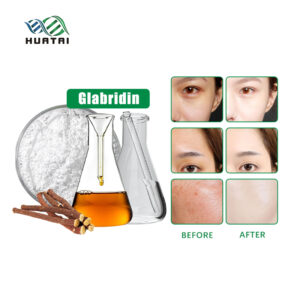
Start with the Assay, Not the Inhibition Claim
Consider a formula targeting 0.1% actual Glabridin. Assuming the assay percentages represent comparable mass fractions, the theoretical addition levels would be:
| Glabridin assay | Material needed for 0.1% actual Glabridin |
|---|---|
| 90% | Approximately 0.111% |
| 40% | 0.25% |
These are calculations, not recommended use levels.
The calculation is straightforward when both figures represent the Glabridin content of the materials as supplied. It becomes less useful if one product is a standardized extract and the other is a formulated dispersion, unless their assay values are reported on the same basis.
Their physical forms may also affect solvent compatibility and appearance in the finished product.
For purchasing, the assay provides a basis for calculating the cost of actual Glabridin. The next question is whether the material can be used in the intended formula without creating additional formulation problems.
What Does Tyrosinase Inhibition Tell Us?
Glabridin is a licorice-derived isoflavan investigated for its effects on melanogenesis.
Yokota et al. (1998) studied Glabridin using B16 mouse melanoma cells and guinea pig skin. The researchers reported inhibition of cellular tyrosinase activity at concentrations of 0.1–1.0 μg/mL. They also observed reduced UVB-induced pigmentation following topical application of 0.5% Glabridin in guinea pigs.
The study provides experimental evidence for Glabridin’s activity in those models. It does not establish an appropriate use level for a commercial facial serum.
An IC50 represents the concentration associated with 50% inhibition under the conditions used. When reviewing a supplier’s report, it is important to establish whether that concentration refers to purified Glabridin or the commercial material containing it.
A mushroom tyrosinase assay cannot be compared directly with a cell-based experiment. Substrate selection, incubation time and sample preparation can also affect the result.
Two suppliers may report different inhibition percentages without having tested their materials at the same concentration. In that situation, the original reports are needed before the figures can be meaningfully compared.
The Formulation May Be the More Difficult Part
Glabridin has limited water solubility. For a water-rich brightening serum, this can present a practical difficulty even when the ingredient has convincing biological data.
A powder may appear to dissolve during preparation but develop visible crystals after storage. A solvent system that works in a simple laboratory mixture may behave differently after thickeners, emulsifiers and other ingredients are added.
The incorporation method depends on the grade and the formula. For a solvent-based approach, the first trials should establish whether the intended Glabridin concentration can be achieved and maintained without precipitation.
Cooling and storage observations are useful here. A clear sample immediately after preparation is not sufficient evidence that the ingredient will remain dissolved.
Analytical testing can provide further information. A serum may retain an acceptable appearance while its measured Glabridin content changes. Such a result requires investigation; it does not automatically indicate chemical degradation.
Would a Different Delivery System Help?
A pre-dissolved grade or formulated carrier may make Glabridin easier to incorporate. Whether that advantage carries through to the finished serum depends on the carrier and the complete formulation.
Improved dispersion does not necessarily mean greater skin delivery. Claims of enhanced penetration or deposition require suitable comparative testing. Stronger visible brightening claims need evidence from the finished product.
When comparing commercial grades, testing at equivalent actual Glabridin concentrations in the same base helps separate formulation behavior from differences in assay.
Pigmentation research is also moving beyond conventional enzyme inhibition studies. In October 2026, Greentech received an IFSCC applied research award for work with Labskin involving neuronal RGMB signalling in focal hyperpigmentation (Greentech, 2026). This is a separate research direction, not evidence of an additional mechanism or improved efficacy for Glabridin.
Before Approving a Glabridin Grade
A supplier’s specification should identify the commercial material and its declared Glabridin content. The batch-specific COA provides analytical results for the material supplied.
Biological reports need their own supporting information, particularly the identity of the tested sample and the method used. Published studies on purified Glabridin may be relevant to a commercial grade without establishing that grade’s measured inhibitory activity.
For a serum project, the choice between 40% and 90% Glabridin may ultimately depend on incorporation, stability and cost at the intended active concentration.
A higher assay reduces the amount of raw material needed. Whether that translates into a practical advantage depends on how the grade performs in the formula.
References
- Yokota, T., Nishio, H., Kubota, Y., & Mizoguchi, M. (1998). The inhibitory effect of glabridin from licorice extracts on melanogenesis and inflammation. Pigment Cell Research, 11(6), 355–361. DOI: 10.1111/j.1600-0749.1998.tb00494.x
- Greentech (2026). Greentech Wins the 2026 IFSCC Grand Prize for Applied Research. Company announcement.

 English
  Spanish
  German
  French
  Japanese
  Korean