Buyers searching for the glabridin price often encounter significant cost variations across suppliers. The underlying reason is straightforward. Glycyrrhiza glabra roots yield less than 0.2% of this specific active compound. This strict biological limit dictates the baseline production cost.
As a manufacturer of cosmetic skincare active ingredients, Shaanxi Huatai focuses on the exact physicochemical realities of the raw material. Formulators do not need overpriced proprietary blends or exaggerated modification technologies to handle this ingredient. You simply need accurate solubility data and a precise solvent matrix.
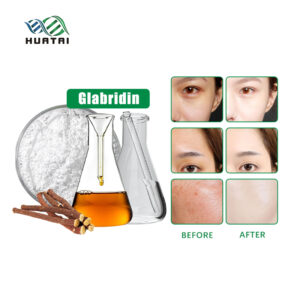
Below is a technical breakdown of how purity impacts performance, stability, and formulation strategy.
Specification & Parameter Breakdown
The cosmetics market requires quantifiable active percentages. We reject vague extraction ratios like “10:1”. The physical behavior of the extract changes dramatically depending on the defined assay.
| Parameter | 40% Glabridin | 90% Glabridin | 99% Glabridin |
|---|---|---|---|
| Appearance | Brown to yellowish-brown powder | Pale yellow powder | White to off-white powder |
| Purity (HPLC) | ≥ 40.0% | ≥ 90.0% | ≥ 99.0% |
| Solubility | Soluble in BG, PG, Ethanol | Soluble in BG, PG, Ethanol | Soluble in BG, PG, Ethanol |
| Core Application | Opaque creams, heavy lotions | Clear serums, high-end lotions | Clinical grade target formulas |
| Cost Impact | Highly cost-effective | Balanced cost & efficacy | Premium commercial cost |
The Reality of Color Shifts and Crystallization
Many suppliers avoid discussing color changes and crystallization. We address them directly.
High-purity glabridin is a pale yellow to white powder. When dissolved in liquid, the solution may darken over time. The phenolic hydroxyl groups within its chemical structure readily oxidize when exposed to light, heat, or oxygen.
Crystallization occurs because the molecule is highly lipophilic and has a high melting point. It is strictly insoluble in water. If your solvent matrix is weak, or if the emulsion polarity shifts abruptly during the cool-down phase, the powder will precipitate.
Tested Solvent Matrix Protocol
We evaluated the dissolution of 1% Glabridin (90% purity) in a specific solvent blend.
- Solvent System: Propylene Glycol and PEG-400 (1:1 ratio).
- Temperature: 45°C under continuous stirring.
- Result: Complete dissolution achieved. The solution remained physically stable at room temperature for 30 days. No crystal formation occurred.
- Formulation Advice: Always pre-dissolve the active. Add this pre-mix to your emulsion during the final cool-down phase below 40°C. Add 0.1% Vitamin E or BHT into the oil phase. This halts the oxidation chain reaction and prevents color degradation.
Efficacy Data: Tyrosinase Inhibition and Comparative Context
We evaluate efficacy using standard IC50 values (the concentration required for 50% inhibition of an enzyme). We must compare these figures scientifically. Different ingredients operate via different mechanisms.
| Active Ingredient | Target Enzyme | IC50 Value (μM) | Formulation Characteristic |
|---|---|---|---|
| Glabridin | Mushroom Tyrosinase | 0.43 ± 0.05 | Lipophilic, requires oil/glycol carriers |
| Kojic Acid | Mushroom Tyrosinase | 14.50 ± 1.20 | Water-soluble, highly effective but pH sensitive |
| Alpha-Arbutin | Mushroom Tyrosinase | 53.00 ± 3.50 | Water-soluble, excellent physical stability |
This data shows glabridin possesses a very low IC50 value for tyrosinase inhibition in vitro. Formulators only need 0.01% to 0.05% of the 90% grade to reach target efficacy.
We do not claim it renders other actives obsolete. Alpha-Arbutin and Kojic Acid remain powerful, water-soluble options. The choice depends entirely on your formulation chassis.
It also demonstrates secondary antibacterial activity. Internal and published assays show a Minimum Inhibitory Concentration (MIC) ranging from 3.12 to 12.5 μg/mL against common skin strains like Staphylococcus aureus.
Actual Batch Testing Data (COA)
Reliable manufacturing requires transparent quality control. Below is a representative batch test for our 90% specification. We utilize international testing standards.
| Test Item | Specification Standard | Real Batch Result | Test Method |
|---|---|---|---|
| Assay (Glabridin) | ≥ 90.0% | 91.4% | HPLC |
| Loss on Drying | ≤ 5.0% | 1.6% | USP <731> |
| Heavy Metals (Pb) | ≤ 10 ppm | < 2 ppm | ICP-MS |
| Total Aerobic Microbial Count | ≤ 1000 cfu/g | 45 cfu/g | ISO 21149 |
| Yeast & Mold | ≤ 100 cfu/g | < 10 cfu/g | ISO 16212 |
Formulating to the YMYL Standard
Skincare products must meet high safety standards. The active molecule must cross the lipid barrier of the skin to reach the melanocytes in the basal layer. Its lipophilic nature facilitates this penetration naturally.
Formulation Case Study: 0.1% Active Emulsion
We designed a base emulsion to test stability.
- Phase A (Water): Water, Glycerin (3%), Sodium Hyaluronate (0.1%).
- Phase B (Oil): Squalane (5%), Caprylic/Capric Triglyceride (4%), Cetearyl Alcohol.
- Phase C (Active Pre-mix): 0.1% Glabridin dissolved in 1.5% Butylene Glycol.
- Process: Phase A and B were heated to 75°C, homogenized, and cooled. Phase C was added at 38°C.
- Stability Result: The emulsion maintained physical stability after 12 weeks of accelerated testing at 45°C. The color remained consistent.
Formulation Warning: Keep your final formula pH between 5.5 and 7.0. Highly acidic environments degrade the compound. Do not mix it with strong oxidizers like Benzoyl Peroxide. If combining it with Vitamin C, use stable derivatives like Ascorbyl Glucoside rather than low-pH Ascorbic Acid.
Top 8 Supplier FAQ
Buyers globally ask these eight core questions when sourcing this active material.
The price is tied to the purity specification and the physical extraction yield. Refining the extract from 40% to 99% requires complex, multi-stage chromatographic separation. This significantly increases the manufacturing cost.
The powder is completely insoluble in water. You must pre-dissolve it in glycols (such as Butylene Glycol or Propylene Glycol) or ethanol. Introduce this liquid mixture into your formulation during the final cool-down phase.
The 40% grade contains native plant matrix compounds, resulting in a brown color. It is practical for opaque creams. The 90% grade is highly purified and pale yellow. It is mandatory for clear serums or white lotions where color interference must be avoided.
Yes. It pairs well with retinol to soothe potential irritation. When pairing with Vitamin C, select stable derivatives. Raw Ascorbic Acid requires a very low pH, which compromises the stability of licorice extracts.
We control moisture content strictly below 5%. The powder is packed in light-resistant, vacuum-sealed aluminum bags. This prevents premature oxidation. Proper storage guarantees a 24-month shelf life.
Yes. We supply sample kits to R&D teams for benchwork and compatibility testing. We dispatch the corresponding Certificate of Analysis (COA) and Technical Data Sheet (TDS) with the shipment.
Yes. It is globally approved for cosmetic application. It is listed in the IECIC (Inventory of Existing Cosmetic Ingredients in China) and has a verified safety profile under CIR (Cosmetic Ingredient Review) guidelines.
Add oil-soluble antioxidants like BHT or Vitamin E to your formulation. Ensure the final retail packaging is opaque and utilizes an airless pump design. This blocks UV exposure and limits oxygen contact.
Referenced Public Literature
- Yokota, T., et al. (1998). “The inhibitory effect of glabridin from licorice extracts on melanogenesis and inflammation.” Pigment Cell Research, 11(6), 355-361.
- Simmler, C., et al. (2013). “Species-specific licorice phytochemicals.” Fitoterapia, 90, 160-184.
- Draelos, Z. D. (2007). “Skin lightening preparations and the hydroquinone controversy.” Dermatologic Therapy, 20(5), 308-313.
- Fatima, A., et al. (2009). “In vitro antibacterial activity of licorice extract against Staphylococcus aureus.” Journal of Microbiology, 47(3), 263-268.
 English
  Spanish
  German
  French
  Japanese
  Korean