
Totarol: Navigating Biological Activity vs. Cosmetic Efficacy
For naturally derived active ingredients, biological activity should not be confused with proven cosmetic efficacy. Totarol is a good example. Published research has explored its antimicrobial, antioxidant and anti-inflammatory properties, along with several other biological activities.
However, these findings come from different experimental models, and the strength of the evidence varies considerably. Studies involving microorganisms, cultured cells and the relatively limited human data each answer different scientific questions and need to be interpreted within their own context. Before looking at individual mechanisms, it is more useful to understand the evidence as a whole.
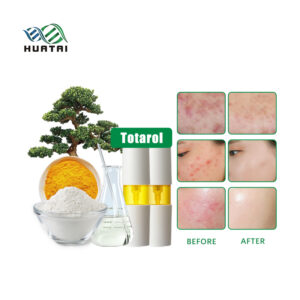
1. Antimicrobial Activity Has the Longest Research History
Among the biological properties investigated for Totarol, antimicrobial activity has one of the strongest research bases. Early studies reported activity against several microorganisms, particularly Gram-positive bacteria. Subsequent work examined possible effects on bacterial membranes, cellular respiration, and cell division.
The research has therefore developed beyond a simple observation of “bacterial inhibition” to explore how the compound may affect bacterial physiology. However, most of this evidence comes from controlled laboratory systems.
A minimum inhibitory concentration measured in a microbiological assay tells us how a microorganism responded under defined test conditions. It does not tell us the concentration required in a finished cosmetic, nor whether the same effect would occur on skin.
2. Antioxidant Research Looks at a Different Question
Antioxidant research examines a different aspect of Totarol biology. Studies have investigated Totarol in models involving lipid oxidation, reactive oxygen species, and cellular oxidative stress. Some experiments have reported changes in oxidative markers or antioxidant-related pathways.
But “antioxidant activity” is a broad term. A chemical assay, a cell experiment, and a biological tissue model do not measure exactly the same thing. A compound may perform well in one model and behave differently in another. This is why antioxidant test results should be reported together with the experimental model and conditions rather than presented as a single universal measure of activity.
3. Anti-inflammatory Activity Has Also Been Investigated
Inflammation is another area of Totarol research. Experimental studies have examined inflammatory responses in different biological systems. Depending on the model, researchers have looked at inflammatory mediators, signaling pathways, or changes associated with oxidative stress.
The evidence here is less straightforward than the antimicrobial literature. One reason is the variety of experimental materials used in published research. Some studies examine purified Totarol, while others investigate plant extracts or related diterpenes. That difference cannot be ignored. If an extract produces an anti-inflammatory response, the result cannot automatically be attributed to Totarol alone.
4. Other Biological Effects
Totarol research extends beyond these three major areas. Published studies have also examined topics such as biofilm formation, membrane interactions, and other experimental biological responses. These studies can be useful for understanding the broader biological profile of the molecule.
They should not, however, be grouped together as established cosmetic benefits. For example, an experiment designed to investigate bacterial biofilm formation is answering a microbiological question. It does not automatically demonstrate an effect on skin condition or cosmetic appearance.
5. How Should the Evidence Be Compared?
A useful way to assess Totarol research is to separate the evidence by experimental level. This framework prevents a common mistake: treating every positive experiment as equivalent evidence.
| Evidence Type | What It Can Demonstrate | What It Cannot Establish on Its Own |
|---|---|---|
| Chemical or biochemical assay | Activity under defined conditions | Skin or clinical efficacy |
| Microbiological assay | Response of selected microorganisms | Performance in a finished cosmetic |
| Cell study | Cellular response and possible pathways | Human cosmetic benefit |
| Animal study | Preclinical biological response | Direct human efficacy |
| Human study | Evidence under human conditions | Universal performance across all formulas |
6. What Does the Current Evidence Actually Support?
- Totarol has a substantial history of experimental research, particularly in antimicrobial science.
- Antioxidant and anti-inflammatory properties have been investigated, but evidence comes from different models.
- The amount of human cosmetic evidence is much smaller than the amount of laboratory research.
- Biological activity should be separated from finished-product efficacy.
7. From Biological Activity to Cosmetic Relevance
The biological activity of an isolated molecule is only the starting point. Once the ingredient enters a formulation, its behavior can be affected by the surrounding system (oils, surfactants, emulsifiers, solvents, polymers, preservatives). As a result, a biological result obtained with purified Totarol cannot simply be transferred to every cosmetic formula containing Totarol.
For R&D teams, the more useful approach is to build an evidence chain:
8. What Is Still Missing From the Research?
The current literature provides a useful scientific foundation, but several gaps remain. More application-oriented research could help clarify:
These are not weaknesses of the molecule itself; they are simply the necessary questions when moving from research literature to product development.
9. A More Practical Way to Read Totarol Research
When reviewing a paper on Totarol, asking whether the result was “positive” is not enough. Consider these four critical questions:
-
What material was tested?
Was it purified Totarol, a plant extract or another related compound? -
What model was used?
Was the experiment performed on bacteria, cells, animals or humans? -
What was actually measured?
Was it microbial growth, an oxidative marker, an inflammatory mediator or a clinical endpoint? -
Was the test relevant to the intended cosmetic application?
Were the conditions representative of cosmetic use?
Frequently Asked Questions (FAQ)
1. What biological activities has Totarol been studied for?
Published research has investigated antimicrobial, antioxidant and anti-inflammatory activities, as well as biofilm-related and other experimental biological effects.
2. Which Totarol activity has the strongest research background?
Antimicrobial activity has one of the longest and most developed research histories, particularly in studies involving selected Gram-positive microorganisms.
3. Is Totarol clinically proven to have cosmetic efficacy?
Current evidence does not support broad clinical claims. Much of the published research is based on laboratory or preclinical models, while human cosmetic evidence remains limited.
4. Is Totarol an antioxidant ingredient?
Totarol has demonstrated antioxidant-related activity in several experimental models. However, antioxidant activity in a laboratory assay should not automatically be interpreted as an anti-aging or skin-protective effect in humans.
5. Does Totarol have anti-inflammatory activity?
Anti-inflammatory effects have been investigated in experimental models, but the evidence is less extensive and should be distinguished between studies using purified Totarol and those using botanical extracts.
6. Can Totarol be used as a cosmetic antimicrobial or preservative?
Its antimicrobial activity makes it scientifically relevant to cosmetic research, but raw-material activity does not by itself demonstrate preservation efficacy in a finished formulation. A complete formulation requires appropriate preservation testing.
7. Why are Totarol studies difficult to compare directly?
Researchers use different microorganisms, concentrations, test systems and endpoints. Results from a bacterial assay, cell model and human study therefore cannot be compared as though they were measuring the same outcome.
8. What should cosmetic formulators look for when evaluating Totarol research?
Look at the tested material, experimental model, concentration, endpoint and relevance to the intended formulation. The quality of the evidence matters more than the number of published “positive” results.
References
- Kubo I, Muroi H, Himejima M. Antibacterial activity of totarol and its potentiation. Journal of Natural Products. 1992;55(10):1436-1440.
- Haraguchi H, Oike S, Muroi H, Kubo I. Mode of antibacterial action of totarol, a diterpene from Podocarpus nagi. Planta Medica. 1996;62(2):122-125.
- Haraguchi H, Ishikawa H, Sakai S, Ying BP, Kubo I. Inhibition of lipid peroxidation by diterpenoid from Podocarpus nagi. Experientia. 1996;52(6):573-576.
- Evans GB, Furneaux RH, Gravestock MB, Lynch GP, Scott GK. The synthesis and antibacterial activity of totarol derivatives. Part 1: Modifications of ring-C and pro-drugs. Bioorganic & Medicinal Chemistry. 1999;7(9):1953-1964.
- Mateo CR, Brochon JC, Ulises Acuña A, et al. A fluorescence study of the interaction and location of (+)-totarol, a diterpenoid bioactive molecule, in model membranes. Biochimica et Biophysica Acta. 2000;1509(1-2):167-175.
- Gao H, et al. Totarol prevents neuronal injury in vitro and ameliorates brain ischemic stroke: Potential roles of Akt activation and HO-1 induction. Toxicology and Applied Pharmacology. 2015;289(2):142-154.
- Zhang Z, Huang Y, Wu C, et al. Totarol loaded lipase-responsive liposomes for anti Gram-positive bacterium infection. RSC Advances. 2026.


 English
  Spanish
  German
  French
  Japanese
  Korean