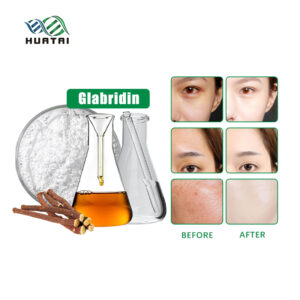
A concealer can make uneven skin tone look more uniform immediately. Adding a skincare benefit creates a separate development requirement: the selected ingredient must have a defined role beyond coverage.
Licorice is already part of this discussion. Schwan Cosmetics’ November 2026 business announcement identified growing demand for products combining makeup and skincare. This is a manufacturer-reported market signal, rather than evidence of ingredient efficacy (Schwan Cosmetics, 2026).
One current example is Jones Road’s Wide Awake Brightening Concealer. Its published ingredient list includes Glycyrrhiza Glabra (Licorice) Root Extract, which the brand presents within a botanical complex. The ingredient list does not disclose its glabridin content or establish that it is equivalent to a high-purity Glabridin raw material (Jones Road, accessed November 2026).
For formulators considering licorice ingredients, that distinction affects both material selection and the claims a finished product can support.
Start with the Ingredient’s Identity
“Licorice extract” describes a botanical preparation. Its composition depends on the species, extraction process and subsequent standardisation. A specification may identify selected marker compounds, but the extract name alone does not establish their concentrations.
Glabridin is a defined compound found in licorice. A grade with a verified glabridin assay allows its contribution to the formula to be calculated. That analytical clarity is useful when development specifically targets this compound, although purity alone does not establish finished-product efficacy.
| Selection point | Licorice root extract | High-purity Glabridin |
|---|---|---|
| Composition | Multiple constituents; requires characterisation of the selected extract | A defined compound supplied at a specified assay |
| Relevant specification | Botanical identity, extraction medium, markers, carrier and quality limits | Identity, assay method, impurities and application form |
| Formula contribution | Includes the extract’s carrier and other constituents | Depends on the selected grade and incorporation system |
| Evidence to request | Studies using the same or a sufficiently comparable extract | Glabridin studies, assessed against the supplied grade and intended application |
A botanical extract is not automatically an inferior version of a purified active. It may suit a product designed around a characterised botanical complex. High-purity Glabridin addresses a different requirement: introducing a quantified amount of a particular compound.
Makeup Compatibility Needs Its Own Assessment
The incorporation method must fit the makeup base.
For a liquid extract, the carrier is part of the formulation change. Water, alcohol or glycols introduced with the extract may require adjustments to an anhydrous or emulsion system. Colour and odour should also be evaluated in the selected grade, rather than assumed from the botanical name.
For high-purity Glabridin powder, dissolution or dispersion needs to be established in the actual vehicle. A uniform-looking pigment system can conceal undissolved material, so appearance alone is an incomplete check.
The assessment should follow the properties that matter to the product: shade, coverage, spread and wear. If a solvent change helps incorporate the active but alters pigment distribution or the finish, it becomes part of the development decision.
A grade suitable for a skincare serum should therefore not be carried directly into a concealer formula without application work.
Separate Coverage from a Longer-Term Skin Benefit
The word “brightening” can describe different outcomes in makeup.
Immediate improvement may result from pigment coverage, colour correction or changes in light reflection. That observation does not establish a biological effect from the licorice ingredient.
A longer-term claim needs an evaluation that separates the skin’s condition from the makeup remaining on its surface. Measurements taken while the product is worn cannot, by themselves, distinguish pigment correction from a change in underlying pigmentation.
Ingredient evidence can justify investigating a benefit; the finished makeup must demonstrate that benefit under an appropriate test design. The same applies to soothing claims. Including a recognised skincare ingredient does not identify its contribution within a complex formula.
What to Resolve Before Selecting the Raw Material
For a licorice extract, request the botanical identity, complete carrier composition and any standardised marker content. If the proposed benefit depends specifically on glabridin, ask whether glabridin is measured and how its content is reported.
For Glabridin, review the assay basis and incorporation information for the exact grade. A concentration stated for a raw material is different from the active concentration delivered to the finished formula.
The selection can then follow the brief. A characterised extract may support a botanical-complex approach. A defined Glabridin grade may be more appropriate when the formulation and evidence programme are built around that compound. Neither choice removes the need to preserve makeup performance while demonstrating the intended skincare benefit.
References
- Schwan Cosmetics. (2026, November 20). Innovation drives Schwan Cosmetics to 7.7% growth, led by lip products and makeup-skincare hybrids. Company announcement distributed through San Francisco Oy.
- Jones Road. Wide Awake Brightening Concealer. Official product information and ingredient list. Accessed November 2026.
 English
 Spanish
 German
 French
 Japanese
 Korean