
The way brightening actives are being developed is attracting renewed attention. For a long time, ingredient development in pigmentation-focused skincare has centered on biological efficacy: inhibiting tyrosinase, regulating melanogenesis, reducing melanin transfer, or influencing other pathways involved in pigmentation.
That basic focus remains. What is becoming more visible is the connection between biological targeting, practical use level, and skin tolerance in the development of new actives.
In September 2026, Debut introduced DermCeutical PNar™, a brightening active developed through a platform combining AI, skin genomics and biotechnology. According to Debut, the ingredient was developed by identifying biological drivers of hyperpigmentation and designing a new molecule around those targets. The company reports a 0.45% use level and results from a 12-week clinical study in which 97% of participants showed improvement in hyperpigmentation and 88% showed improvement in skin brightening.
Cosmetics & Toiletries: Debut Launches New Ingredient for Hyperpigmentation
https://www.cosmeticsandtoiletries.com/cosmetic-ingredients/actives/news/22974477/debut-launches-new-ingredient-for-hyperpigmentation
These are company-reported results, so the study design, comparator, endpoints and full data need to be considered before drawing broader conclusions. The market signal is the development approach itself: a specific biological target, a defined use level, measurable pigmentation outcomes and attention to tolerability are being presented as part of the same development story.
For formulators, this raises a practical question:
How should a brightening active be evaluated when these factors are increasingly being considered together?
Brightening Active Evaluation Is Becoming More Practical
One concentration cannot be interpreted in isolation from the active to which it refers. Different brightening ingredients have different molecular structures, mechanisms of action, potency and formulation behavior. The concentration required for one active therefore cannot simply be transferred to another.
This makes brightening active concentration a formulation-specific question rather than a universal measure of ingredient strength. The 0.45% level reported for PNar is relevant to its own development and positioning, but does not establish a benchmark for other brightening actives.
For formulators, the practical question is:
What use level allows a specific active to deliver its intended function in the finished formulation?
Use Level and Skin Tolerance
Once the product is intended for repeated application, the selected use level also needs to be considered alongside skin tolerance.
Brightening active irritation is influenced by more than concentration. The active’s chemical properties, formulation vehicle, pH, penetration behavior, application frequency and combination with other actives can all affect the skin response. A lower use level may reduce exposure, but it does not automatically guarantee lower irritation. Similarly, a potent active does not necessarily create a tolerance problem when the use level and formulation environment are appropriately controlled.
The formulation task is therefore to establish a level that provides the required performance within the intended pattern of use. This is where the current interest in precision and low-use-level brightening becomes relevant: it brings an established formulation consideration into the discussion surrounding new active development.
Why Established Actives Still Matter
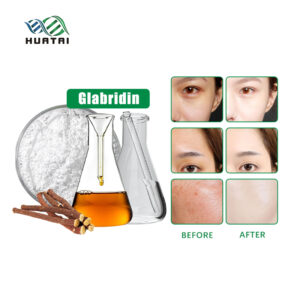
The move toward biotechnology-based actives does not make established brightening ingredients scientifically static. Glabridin provides a useful example.
Glabridin has long been studied in relation to tyrosinase activity and melanogenesis. A 2026 study expanded this understanding by examining both melanin synthesis and melanin transfer. The researchers reported that Glabridin suppressed melanogenesis through downregulation of the Wnt/β-catenin pathway and MITF expression. They also observed reduced melanocyte dendrite formation and inhibition of melanin transfer, with the latter effects associated with regulation of Rho family GTPases and F-actin reorganization.
PubMed: Glabridin Inhibits Melanogenesis and Melanin Transfer
https://pubmed.ncbi.nlm.nih.gov/41901315/
Another 2026 study examined a later stage of the pigmentation process. It reported that Glabridin promoted melanosome degradation in keratinocytes through autophagy activation and reduced melanosome-associated mitochondrial dysfunction. Depigmenting effects were also observed in pigmented epidermal skin equivalents and zebrafish embryos.
PubMed: Glabridin Promotes Melanosome Degradation via Autophagy
https://pubmed.ncbi.nlm.nih.gov/42019358/
Together, these studies expand the biological questions surrounding a molecule that has already been extensively investigated. The development opportunity for an established active can therefore come from understanding additional biological processes, rather than necessarily creating a new molecule.
From Biological Activity to Formulation Performance
The same principle applies to formulation development. Glabridin has limited transdermal absorption, which can create challenges when translating its biological activity into topical application. A 2026 study investigated German chamomile-derived extracellular vesicles as a carrier for Glabridin. Compared with free Glabridin, the tested system showed improved skin penetration and retention, while in vitro and in vivo experiments reported effects related to pigmentation and UVA-induced melanogenesis.
ACS Applied Nano Materials: German Chamomile-Derived Extracellular Vesicles for the Transdermal Delivery of Glabridin
https://pubs.acs.org/doi/10.1021/acsanm.6c00026
These findings are specific to the tested system and should not be generalized to all Glabridin formulations. The study illustrates a different development route for an established active: formulation technology can be used to investigate how an existing biological activity may be incorporated and expressed more effectively in a topical system.
For formulators, this brings the focus to practical questions such as:
- What use level is appropriate for the intended formulation?
- How can the active be incorporated uniformly?
- What processing and stability conditions need to be controlled?
- Can the finished formulation maintain its intended performance during storage and repeated use?
What This Means for Brightening Formulation
The current interest in biotechnology and precision brightening is therefore less about replacing established ingredients with newly designed molecules. It points toward a development approach in which biological activity needs to be considered together with practical use level, tolerance and formulation behavior.
For a formulator, the evaluation ultimately comes down to three questions:
- Efficacy — Does the evidence support the intended biological activity?
- Use level — What concentration is required in the actual formulation?
- Tolerance — Is that level appropriate for the intended frequency and duration of use?
Solubility, stability, compatibility and processing behavior then determine whether the active can be translated into a viable finished product.
For new biotech actives, the development opportunity may begin with identifying a biological target and designing a molecule around it. For established actives such as Glabridin, it may come from expanding the understanding of their biological mechanisms or improving their formulation performance.
The distinction between “new” and “old” is therefore less useful than asking whether an active’s biological activity can be translated into consistent performance at a practical use level and with appropriate skin tolerance.


 English
  Spanish
  German
  French
  Japanese
  Korean