Formulas crash. Actives precipitate overnight. Why? Sourcing raw materials is an unforgiving process. I see formulators struggle with chemical stability daily. The root cause usually traces directly back to the supplier. Not all Ferulic Acid (CAS 1135-24-6) is equal.
Synthetic extraction differs wildly from natural pathways. This dictates your baseline impurity profile. Grey-market adulteration is a real threat in global procurement. Some suppliers cut batches with cheap benzoic acid. Others use inert cellulosic fillers to fake the bulk volume. You need a strict ≥98.0% HPLC purity baseline. Does your current batch pass a verified spectrophotometric assay? If not, your formulation is already compromised before the pilot stage.
Extraction Pathways: Synthetic vs. Natural
Sourcing compliance demands absolute traceability. You must rigorously quantify heavy metal limits, residual solvents, and unreacted precursors.
| Parameter | Synthetic Origin | Natural Origin (Rice Bran) |
|---|---|---|
| Primary Source | Vanillin + Malonic Acid | Gamma-Oryzanol |
| Reaction Pathway | Knoevenagel Condensation | Alkaline Hydrolysis |
| Isotope Profile | Depleted (Petrochemical) | Modern Carbon-14 (Biogenic) |
| Residual Solvents | Pyridine traces possible | Ethanol / Water |
Strict COA Benchmark Data
I audit COAs constantly. Discrepancies are alarming. To engineer highly active antioxidant serums without phase separation, you need exact batch-specific data. The following parameters represent the mandatory threshold for high-end skincare production.
| Test Item | Cosmetic Grade Specification | Analytical Method |
|---|---|---|
| Appearance | Off-white to light-yellow powder | Visual |
| Assay (Purity) | ≥ 98.0% | HPLC |
| Melting Point | 168.0°C – 172.0°C | Capillary Method |
| Loss on Drying | ≤ 0.50% | 105°C, 2 hours |
| Heavy Metals | ≤ 10 ppm | ICP-MS |
Samples available upon request for lab-scale solvent compatibility trials.
Formulation Architecture: Fixing the Precipitation Problem
Here is a common error. Formulators try dissolving this crystalline powder directly into a cold aqueous base. It fails. Irreversible recrystallization happens instantly.
The pKa of this phenolic acid is exactly 4.58. You must formulate below this threshold. Optimal trans-epidermal delivery requires a final formula pH of 2.5 to 3.0. How do you stabilize it? I always advise a strict pre-wetting protocol. Use targeted glycols. Ethoxydiglycol or Propanediol work best. Heat the solvent phase moderately to 40°C. Dissolve the powder completely. Only then should you titrate it slowly into the main aqueous batch under moderate shear.
At a 0.5% concentration, it creates a thermodynamic sweet spot. It stabilizes 15% Ascorbic Acid and 1% Tocopherol. This specific matrix doubles the intrinsic photoprotective capability of the formula. It prevents premature oxidation of the aqueous phase. 数据来源于-[Journal of Investigative Dermatology]
Tyrosinase Inhibition & ROS Scavenging
It goes beyond basic stabilization. It is a highly potent phenolic antioxidant. It scavenges reactive oxygen species (ROS) triggered by UVA/UVB exposure. It also exhibits competitive binding at the tyrosinase active site.
Laboratory assays show measurable tyrosinase inhibition at 1.0 mM concentrations. This dual-pathway mechanism is critical. You substantiate preventative photoprotection. You simultaneously target post-inflammatory hyperpigmentation (PIH). It achieves this without the melanocyte toxicity seen with older synthetic lighteners. 数据来源于-[International Journal of Molecular Sciences]
Trend Synergies: Beyond C+E+F
The classic Ascorbic Acid and Tocopherol matrix is standard. But modern clean-beauty pipelines require cascading networks. Clinical formulators are moving past traditional constraints.
Try combining 0.5% Ferulic Acid with 1.0% Bakuchiol. Or pair it with 0.2% Pterostilbene. This targets melanogenesis and dermal extracellular matrix degradation concurrently. It neutralizes intracellular ROS. It inhibits matrix metalloproteinases (MMPs). The result? Measurable epidermal barrier repair. You avoid the erythema and barrier compromise typical of high-dose retinoid conversions.
8 High-Frequency FAQs for B2B Procurement
Q1: What is the exact solubility profile of this powder?
Aqueous solubility is extremely low (< 0.1 g/100 mL at 20°C). It is highly soluble in ethanol, and specific glycols like Ethoxydiglycol. You must utilize primary co-solvents before incorporating it into any water phase.
Q2: How do you guarantee the natural origin claim?
Our natural grade undergoes alkaline hydrolysis from Oryza sativa (rice bran). We validate this. We provide complete batch-specific supply chain documentation and independent Carbon-14 isotope testing to confirm biogenic origin.
Q3: Can your material contain benzoic acid adulterants?
No. Every batch undergoes HPLC quantification. Benzoic acid has a melting point of 122°C. It lacks a phenolic ring response. Our strict 168–172°C melting point standard and ≥98.0% HPLC purity block all grey-market adulteration.
Q4: What is the accurate pH range for a stable serum?
To prevent ionization, the pH must remain below the molecule’s pKa of 4.58. For stable Ascorbic Acid synergies, the industry-standard operating range is strictly 2.5 to 3.0.
Q5: Do you supply reference samples for pilot trials?
Yes. Professional samples are available for R&D laboratories. Use them for solubility matrix testing and accelerated thermal stability protocols.
Q6: What degradation pathways cause formula failure?
The raw powder is vulnerable to UV-induced photo-isomerization. It converts from trans to cis isomers. It also suffers thermal decarboxylation. Bulk material and finished serums require opaque, UV-blocking packaging. Store below 25°C.
Q7: Can this ingredient be formulated alongside Bakuchiol?
Yes. Combining it with Bakuchiol creates a highly stable anti-photoaging matrix. You completely bypass the pH conflict and oxidation risks associated with traditional retinoid formulations.
Q8: Are HPLC chromatograms included with the COA?
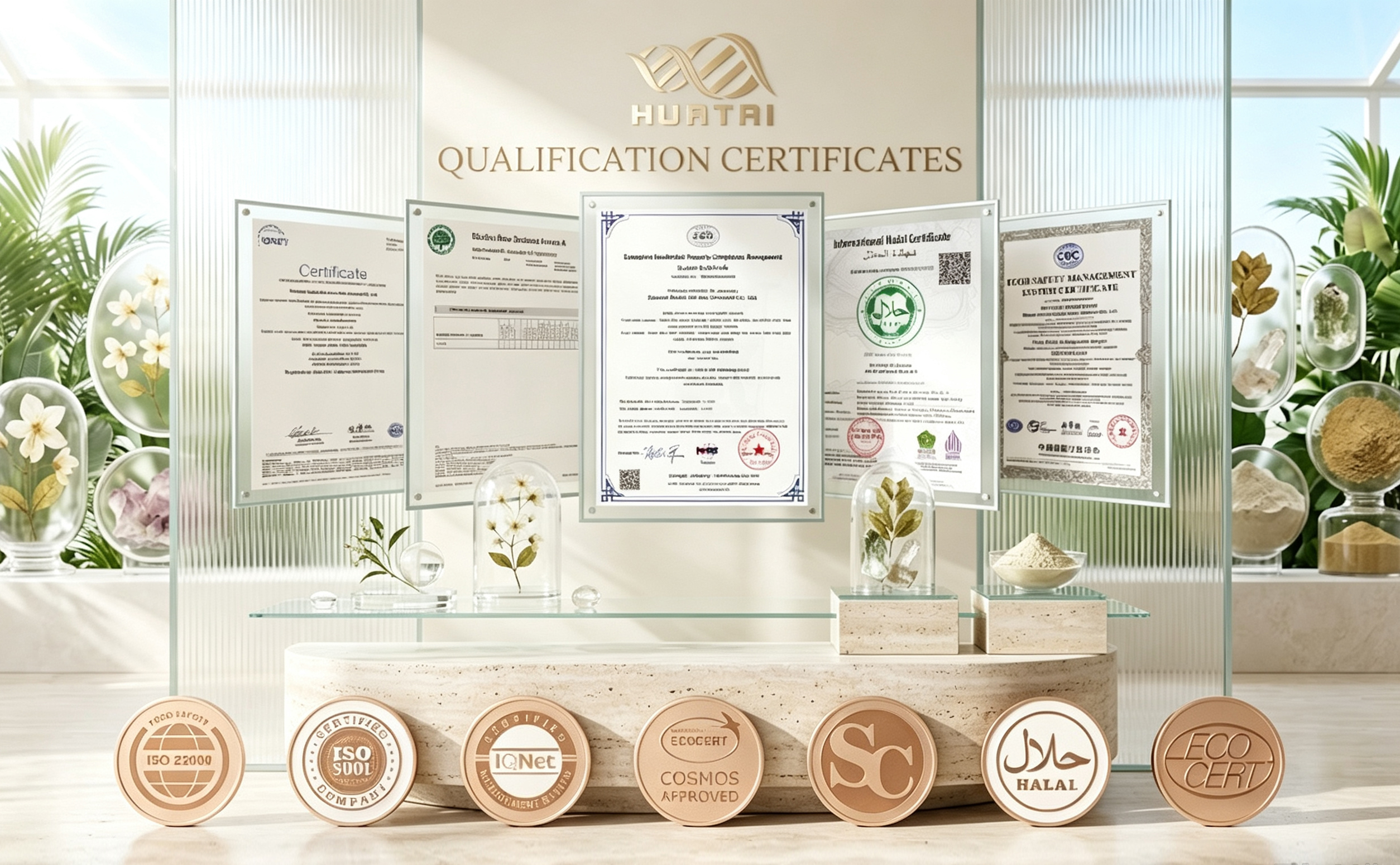
Yes. We provide comprehensive documentation upon dispatch. You receive the exact COA, technical data sheet (TDS), safety data sheet (MSDS), and original HPLC chromatograms to support your Product Information Files (PIF).
 English
 Spanish
 German
 French
 Japanese
 Korean