
AI is starting to change how cosmetic formulators search for ingredients and review technical information. A formulator can use these tools to shortlist actives, compare available options and find documents that would otherwise take time to track down.
But finding an ingredient is usually the easy part.
The more difficult question comes later: which commercial grade should go into the lab, and what evidence supports that choice?
Two developments in 2026 illustrate how this area is changing. Grant Industries introduced an AI-powered formulation assistant developed with Albert, while Coptis discussed ways to make cosmetic formulation data more suitable for AI-supported workflows. Both point toward a closer connection between formulation knowledge and digital tools. The practical value, however, depends on the quality and relevance of the underlying data.
For cosmetic R&D teams, this raises a question worth considering: can the available ingredient data actually support the next formulation decision, or does it only help identify a possible starting point?
The Ingredient Shortlist Is Only the Starting Point
Ingredient search tools can narrow a large field of candidates. They may help formulators compare functions, review published information and identify materials worth testing. That is useful, particularly during early-stage development.
Yet an ingredient name alone tells a formulator very little about how a particular grade will behave in a formula. Commercial materials can differ in purity, physical form, carrier system, solubility and recommended handling conditions. These differences can affect processing, appearance and the stability of the finished product.
A search result may identify the right active in principle, but it does not necessarily identify the right material for the formulation under development. The next decision requires more specific information: the grade being supplied, its technical specification, the conditions used to generate the supporting data and the formulation in which performance was assessed.
This is where AI-assisted workflows need reliable technical records. If the source data does not distinguish between grades or test conditions, a system may produce a plausible recommendation without enough evidence to justify it.
Glabridin Shows Why the Commercial Grade Matters
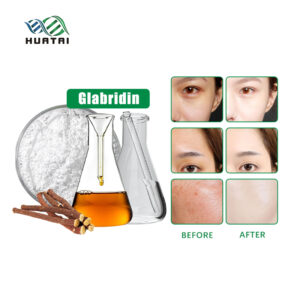
Glabridin is a useful example because the same active can be supplied in different forms for different formulation needs. Depending on the grade, a supplier may offer water-soluble, alcohol-soluble or oil-soluble options. These descriptions are not interchangeable, and they should not be treated as evidence that all grades will behave in the same way.
Consider a formulator developing a water-based serum. A water-soluble Glabridin grade may appear to be the most relevant candidate. But the label alone does not answer every technical question. The formulator still needs to understand how the ingredient has been made water-compatible, what the specification covers, how it should be incorporated and whether it remains suitable under the intended processing and storage conditions.
The same principle applies to an oil-based product. An oil-soluble grade may be a more relevant starting point, but its actual dispersion or dissolution behavior, compatibility with the oil phase and performance in the complete formula still need to be assessed.
For this reason, technical comparisons should identify the actual commercial grade rather than relying on the active name alone. A useful record should connect the ingredient identity with its specification, physical form, solvent or carrier system where relevant, and the test conditions used to support the stated property.
The practical question is not which Glabridin grade is universally best. It is which grade is appropriate for the target formula, and what data supports that selection.
A Solubility Result Does Not Settle the Formulation Question
Solubility data can help screen ingredients, but a reported result is meaningful only when the test conditions are clear. The solvent, concentration, temperature, mixing procedure and observation period can all influence what the result tells us.
There is also a difference between a material dissolving under a defined laboratory condition and that material performing as intended in a finished cosmetic formula. The presence of emulsifiers, oils, electrolytes, polymers or other actives may change the behavior of the system. A result obtained in one solvent cannot automatically be transferred to another formulation.
This matters when AI tools compare technical documents. If one supplier reports solubility under one set of conditions and another uses a different method, the values may look comparable while describing different situations. Without the test details, a ranking can create a false sense of precision.
For formulation work, solubility information is best used as a screening aid. It can help determine which candidates deserve further testing, but it does not replace compatibility studies, stability assessment or evaluation in the intended base.
Better Data Starts With the Material Actually Supplied
If AI is to support more than ingredient discovery, technical information needs to be linked to the material that a formulator can actually order and test. A broad ingredient profile is not enough when commercial grades differ in ways that affect their use.
In practice, useful records include the INCI name and grade designation, specification and assay where applicable, physical form, relevant solubility information, recommended handling conditions, and the methods behind any performance claims. The formulation context matters too: a test result should indicate whether it came from a raw-material assessment, a model formulation or a finished-product study.
These details also make supplier comparisons more meaningful. Two materials should not be considered equivalent simply because they share an ingredient name or intended function. Their specifications, test methods and suitability for the target formula need to be reviewed before drawing a conclusion.
AI can help organize this information, flag missing fields and retrieve relevant records more quickly. It can also help formulators identify questions that need to be resolved before a laboratory trial. What it cannot do is make missing evidence reliable simply by presenting it clearly.
As AI-assisted formulation develops, the quality of ingredient data may become an increasingly important part of R&D infrastructure. The useful measure is not how quickly a system can recommend an active, but whether the recommendation can be traced back to relevant technical evidence and tested under real formulation conditions.
References
- Bettenhausen, C. (2026). AI finds footing in cosmetics and personal care. Chemical & Engineering News, 104.
- Coptis. (2026). Coptis explains how it is making cosmetics formulation “AI-ready”. Personal Care Magazine.
- Grant Industries. (2026). Grant Industries launches AI-powered formulation assistant with Albert. Global Cosmetic Industry.


 English
  Spanish
  German
  French
  Japanese
  Korean