When sourcing Totarol for cosmetic development, buyers often start with purity and price.
Those numbers matter. But they are only part of the picture.
For a botanical-derived active, a more useful supplier assessment should cover ingredient identity, raw material source, analytical testing, batch consistency, documentation, manufacturing transparency, and technical support.
The question is not simply:
“Who can supply Totarol?”
It is:
“Can this supplier provide a Totarol material that can be properly evaluated, qualified, and supplied consistently?”
1. Start With Ingredient Identity and Source
Totarol is a naturally occurring phenolic diterpene that has been isolated from several plant species, including Podocarpus totara.
Its chemical identity is well established. Public chemical databases list Totarol as CAS No. 511-15-9, with the molecular formula C20H30O. PubChem: Totarol
For cosmetic raw materials, however, chemical identity is only the starting point.
A buyer should also ask:
- What is the botanical source?
- Is the raw material traceable?
- How is Totarol identified?
- How is the material standardized?
- Which analytical method is used for assay?
This is particularly relevant when comparing materials from different suppliers. “Natural Totarol” does not by itself describe the complete quality profile of a commercial ingredient.
2. Do Not Compare Purity Numbers in Isolation
Totarol assay is usually one of the first parameters buyers compare.
Commercial products can have different specifications. For example, publicly available materials include products specified at 98% or 99% assay. Cayman Chemical: Totarol Commercial Totarol Specification Example
But 98% and 99% should not be treated as a complete measure of quality.
A buyer should first understand what the number represents.
| Data type | Meaning |
|---|---|
| Specification | The acceptance requirement for the product |
| Typical value | A representative or historical value |
| Batch result | The actual result for a specific production lot |
| COA | Batch-specific quality documentation |
For supplier qualification, a batch-specific result is more informative than a general statement such as “99% purity.”
The analytical method matters too.
If HPLC is used, the supplier should be able to identify the method used for the assay and provide the corresponding batch result.
3. Look at the Quality System, Not Just the Assay
A commercial Totarol specification may include several quality attributes in addition to assay.
Depending on the product and specification, these may include:
| Parameter | Purpose |
|---|---|
| Identification | Confirmation of ingredient identity |
| Assay | Measurement of Totarol content |
| Appearance | Physical conformity |
| Loss on Drying | Moisture-related control |
| Heavy Metals | Contaminant control |
| Microbial Limits | Microbiological quality |
| Residual Solvents | Process-related control, where applicable |
| Batch Number | Traceability |
The exact testing panel should be based on the material, manufacturing process, intended application, and target-market requirements.
This distinction is important.
A supplier’s commercial specification is not the same thing as a universal industry standard.
For example, a supplier may define a specific heavy-metal or microbial limit as part of its own quality system. That does not mean every Totarol supplier worldwide uses exactly the same specification.
4. Batch Consistency Matters More Than One Good Sample
A sample can pass laboratory evaluation and still tell you very little about long-term supply.
For commercial development, the more useful question is whether the supplier can maintain the critical quality attributes across different batches.
Where appropriate, buyers can compare COAs from several production lots.
Useful parameters may include:
- Assay
- Appearance
- Loss on drying
- Heavy metals
- Microbial results
- Other critical quality attributes defined in the specification
The goal is not to expect identical results from every batch.
Some variation is normal.
The important question is whether the variation remains within the supplier’s defined acceptance criteria and whether the material continues to perform consistently in the customer’s formulation.
That becomes particularly relevant once a formula enters stability testing or commercial production.
5. Manufacturer or Distributor? Check the Supply Chain
Buying directly from a manufacturer is not automatically better than buying through a distributor.
The more useful question is how transparent the supply chain is.
Before qualification, buyers can ask:
- Where is the material manufactured?
- What is the botanical source?
- Who controls the manufacturing process?
- Who performs quality release?
- Who issues the COA?
- Can the production batch be traced?
- Who handles quality investigations?
A distributor can be a suitable partner if these responsibilities are clearly defined.
Likewise, a company describing itself as a manufacturer should still be evaluated through documentation and actual quality performance.
The title matters less than the evidence.
6. Technical Support Becomes Important During Development
Totarol sourcing does not end when the sample arrives.
Once the ingredient enters formulation development, practical questions may appear around:
- Solubility
- Dispersion
- Crystallization
- Processing
- Storage stability
- Packaging
Totarol has a hydrophobic molecular structure, so solvent selection and formulation design need to be considered during development. Public technical information also reports solubility in selected organic solvents, illustrating why solvent compatibility should be evaluated rather than assumed. Cayman Chemical: Totarol Technical Data
Supplier recommendations can provide a useful starting point, but they should not be treated as finished-formula validation.
A technically capable supplier should be able to explain the basis of its formulation recommendations and provide relevant product data when requested.
7. Documentation Should Be Available Before Bulk Purchasing
A professional qualification process normally requires more than a sample.
Depending on the target market and application, buyers may request:
- Technical Data Sheet (TDS)
- Safety Data Sheet (SDS)
- Product Specification
- Batch-specific COA
- Raw material source information
- Packaging and storage information
- Shelf-life or retest information
- Regulatory documentation
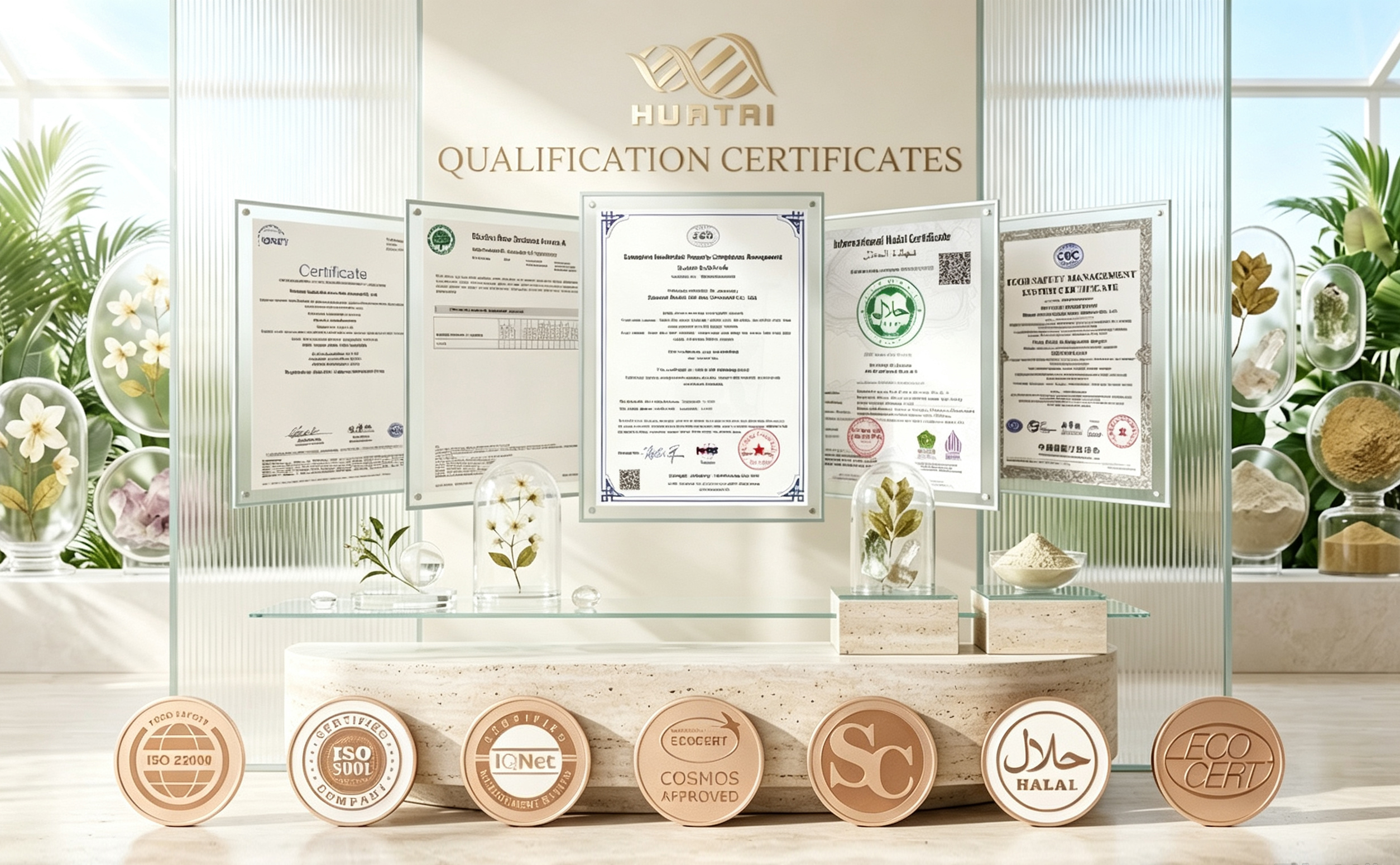
- Applicable certifications
Public commercial Totarol specifications, for example, may include HPLC assay, loss on drying, heavy metals and microbiological parameters. Commercial Totarol Specification Example
The purpose of these documents is straightforward:
They allow R&D, quality, regulatory, and procurement teams to evaluate the same material from different perspectives.
8. A Practical Supplier Evaluation Framework
A simple screening framework can help avoid choosing a supplier based on one attractive number.
| Evaluation area | Key question |
|---|---|
| Ingredient identity | Is the material clearly identified? |
| Botanical source | Is the source documented and traceable? |
| Assay | Is the purity specification clearly defined? |
| Analytical method | Is the assay method documented? |
| Batch consistency | Can multiple batches be evaluated? |
| Quality control | Are relevant contaminants and quality attributes controlled? |
| Documentation | Are TDS, SDS, specification and COA available? |
| Manufacturing | Is the production process and responsibility clear? |
| Technical support | Can the supplier support formulation questions? |
| Supply capability | Are MOQ, lead time and repeat supply clearly defined? |
FAQ: 8 Common Questions About Totarol Suppliers
1. What should I look for in a Totarol supplier?
Focus on ingredient identity, botanical source, analytical testing, batch consistency, documentation, manufacturing transparency, technical support, and supply capability.
2. Is 99% Totarol always better than 98%?
Not necessarily. Assay is important, but the analytical method, specification, impurity control, batch consistency, and intended application also matter.
3. How is Totarol purity measured?
HPLC is commonly used for Totarol assay. Buyers should review the analytical method and, preferably, the result for the specific production batch.
4. What should I check on a Totarol COA?
Check the batch number, assay, identification, appearance, and other quality parameters included in the supplier’s specification, such as heavy metals or microbial limits where applicable.
5. How can I evaluate Totarol batch consistency?
Compare critical quality attributes across multiple production batches rather than relying on a single COA.
6. What documents should a Totarol supplier provide?
Common documents include TDS, SDS, product specification, and batch-specific COA. Additional regulatory or certification documents may be needed for the target market.
7. Can a Totarol supplier provide formulation support?
A technical supplier may provide information on solubility, processing, dispersion, and storage. Final formulation performance still needs to be validated by the formulation team.
8. What should I confirm before placing a bulk Totarol order?
Confirm the evaluated sample, specification, batch COA, documentation, packaging, storage conditions, MOQ, lead time, and the supplier’s ability to maintain consistent quality across repeat orders.
References
- PubChem. Totarol, Compound Summary. Chemical identity, CAS number, molecular formula, and related chemical information.
- Evans G.B., Furneaux R.H., Gravestock M.B., Lynch G.P., Scott G.K. The synthesis and antibacterial activity of totarol derivatives. Part 1: modifications of ring-C and pro-drugs. Bioorganic & Medicinal Chemistry. 1999, 7(9):1953-1964.
- Cayman Chemical. Totarol Technical Data. Chemical identity, physical properties, solubility information, and commercial specification.
- Shaanxi Huatai Bio-Fine Chemical Co., Ltd. Public Totarol technical and commercial specification information.
 English
  Spanish
  German
  French
  Japanese
  Korean