
I watched a client dump a massive production run of premium brightening serum last month. The active components crystallized out of the solution overnight. How does this happen? Many brands treat skincare ingredients like magic dust, especially when formulating with natural skincare ingredients. But as an active ingredient manufacturer, we know the reality. It is all about solubility, pH limits, and thermal stability.
Let us look at the hard data behind some key actives. We will skip the empty marketing promises. Instead, we will focus on the exact chemistry.
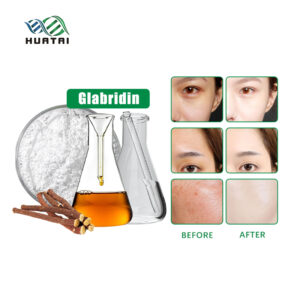
Glabridin: The Tyrosinase Inhibitor
Glabridin is famous for skin brightening. But how well does it actually work? We must look at the specific assay. Published laboratory data using mushroom tyrosinase assays shows its IC50 value for tyrosinase inhibition is approximately 0.43 umol/L. Compare that to common alternatives like Kojic Acid. Glabridin requires a vastly lower concentration to achieve the same enzymatic block.
But working with it requires precision. It hates water. If you just drop it into an aqueous base, it will float or clump.
| Parameter | Specification | Physical State | Solubility Profile |
|---|---|---|---|
| Glabridin 40% | Brownish-yellow powder | Solid | Soluble in Butylene Glycol, Insoluble in water |
| Glabridin 90% | Off-white powder | Solid | Soluble in Propylene Glycol, Insoluble in water |
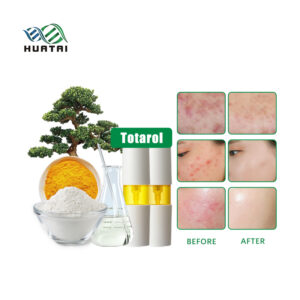
Totarol: Antimicrobial Efficacy
Consumers constantly demand preservative-free labels. Totarol provides a powerful alternative for microbial control. Derived from the Podocarpus totara tree, it targets Gram-positive bacteria aggressively.
Let us look at the precise microbiology. The target organism for acne is Cutibacterium acnes (formerly known as Propionibacterium acnes). The Minimum Inhibitory Concentration (MIC) against C. acnes is extremely low. Standardized broth microdilution tests show MIC values ranging from 0.78 to 1.56 mcg/mL. It fights the bacteria without stripping the skin barrier.
We produce three specific grades to match different formulation visuals. You cannot put a dark powder into a clear gel.
| Grade Category | Visual Appearance | Target Application | Active Purity |
|---|---|---|---|
| Grade A | Yellow powder | Clay masks, dark serums | Min 98% |
| Grade B | Pale yellow powder | Lotions, light creams | Min 98% |
| Grade C | White powder | Clear gels, premium toners | Min 98% |
Licochalcone A and Dipotassium Glycyrrhizinate: The Soothing Matrix
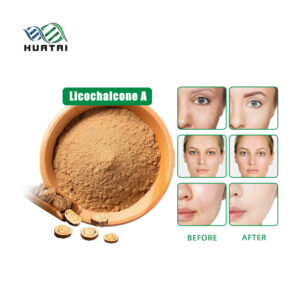
Inflammation drives skin aging. Licochalcone A acts on the inflammatory pathways directly. It works exceptionally well alongside Dipotassium Glycyrrhizinate (DPG).
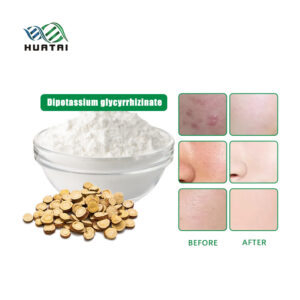
DPG is a white to pale yellow powder. It is completely water-soluble. This makes DPG a formulator’s dream. It stabilizes emulsions. It buffers skin irritation caused by harsh surfactants. If your formula stings, add DPG.
| Ingredient | Primary Function | Solubility | Recommended Dosage |
|---|---|---|---|
| Licochalcone A | Deep soothing | Oil and Alcohol soluble | 0.05% – 0.2% |
| DPG | Anti-irritation | Water soluble | 0.1% – 1.0% |
Application Case: Fixing a Brightening Cream
A downstream client wanted an Alpha-Arbutin and Kojic Acid brightening cream. Their initial prototype turned brown after three weeks at 45 Celsius in the incubator. What went wrong?
Kojic acid is highly unstable in the presence of metal ions and heat. According to the SCCS (Scientific Committee on Consumer Safety) guidelines, Alpha-Arbutin is stable at a pH of 3.5 to 6.5. However, it degrades into hydroquinone if the pH drops below 3.5 or goes above 6.5, especially under continuous thermal stress.
The fix was chemistry, not marketing:
- We added 0.1% sodium metabisulfite as an antioxidant.
- We introduced a chelating agent (0.1% EDTA) to bind stray metal ions.
- We buffered the pH strictly to 5.0 to protect the Alpha-Arbutin.
- We swapped a portion of the Kojic Acid for Glabridin 40%. This maintained the brightening efficacy without the heavy oxidation risk.
The result? The cream passed the 12-week accelerated stability test perfectly.
Compliance, Safety, and Testing (COA)
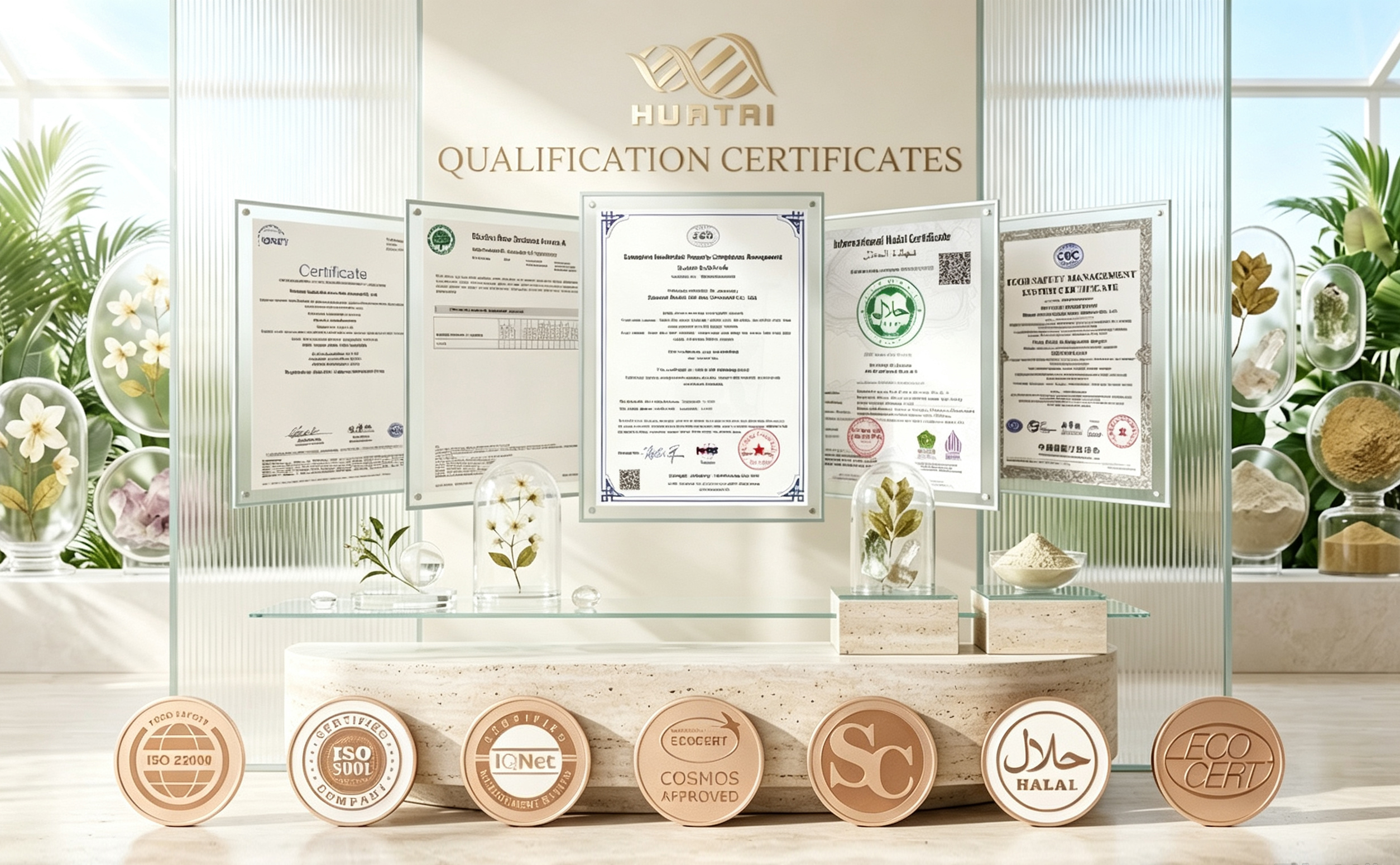
Quality is a strict set of measurable parameters. When you look at a Certificate of Analysis (COA) for these actives, check the heavy metals first. This is a strict YMYL requirement for product safety.
Lead (Pb) must be less than 2 ppm. Arsenic (As) must be under 1 ppm. Total plate counts for bacteria should be strictly below 100 CFU/g. Do not accept anything higher. Your final product safety depends entirely on the raw material’s purity. We test every batch through HPLC (High-Performance Liquid Chromatography) to guarantee the exact concentration of the active molecule.
Prototyping and Next Steps
Testing matters more than reading. If you are developing a new formula, run a micro-batch first. We provide testing samples for exactly this reason. You need to see how the powder behaves in your specific lipid base. Watch the viscosity. Check for pH drift over 48 hours.
Formulating with natural actives requires exact temperatures, strict pH buffering, and the right solvents. Stop guessing. Look at the chemistry. Build your formulations on solid data.
Public Literature and Scientific References Consulted
- Yokota, T., et al. (1998). The inhibitory effect of glabridin from licorice extracts on melanogenesis and inflammation. Pigment Cell Research, 11(6), 355-361. (Referenced for Glabridin mushroom tyrosinase inhibition IC50 values).
- Shi, Y., et al. (2020). Antimicrobial activity and mechanism of totarol against Gram-positive bacteria. Journal of Applied Microbiology. (Referenced for Totarol MIC data against Cutibacterium acnes).
- Kolbe, L., et al. (2006). Anti-inflammatory efficacy of Licochalcone A: correlation of clinical efficacy and in vitro mechanisms. Archives of Dermatological Research, 298(1), 23-30. (Referenced for Licochalcone A cellular pathway data).
- Scientific Committee on Consumer Safety (SCCS). Opinion on the safety of the use of alpha-arbutin in cosmetic products. (Referenced for Alpha-Arbutin pH stability parameters and hydroquinone degradation thresholds).
- Burnett, C. L., et al. (2010). Final report of the safety assessment of Kojic Acid as used in cosmetics. International Journal of Toxicology. (Referenced for Kojic Acid oxidation and thermal stability parameters).

 English
  Spanish
  German
  French
  Japanese
  Korean