
A moisturizer can leave skin feeling softer while doing little for the discomfort that prompted someone to buy it. That gap matters when developing a product for skin that feels easily irritated.
Dipotassium Glycyrrhizate offers a reason to explore soothing alongside moisturization. Its relevance comes from research on inflammatory responses and sensory discomfort, supported by a water-soluble form suited to aqueous skincare. Choosing it requires a clear view of the benefit the formula needs to deliver.
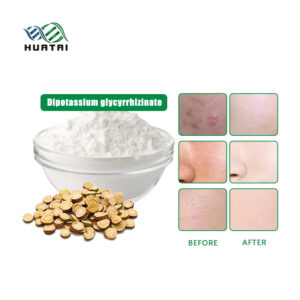
Different licorice ingredients serve different purposes
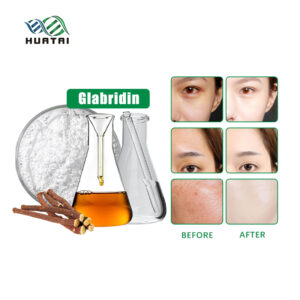
Dipotassium Glycyrrhizate, often abbreviated as DPG, is the dipotassium salt of glycyrrhizic acid. A general licorice extract contains a mixture whose composition depends on the plant material and extraction process. Glabridin is another distinct licorice constituent.
These differences affect ingredient selection. A specification for total licorice flavonoids does not establish DPG content. Likewise, research on glabridin cannot establish the soothing performance of a DPG grade. The CIR safety assessment explicitly distinguishes these defined chemical ingredients from whole plant extracts (CIR Expert Panel, 2007).
When a brief calls for a defined soothing ingredient, identifying the specific licorice compound makes both technical evaluation and purchasing more straightforward.
What supports its use for skin comfort?
One relevant publication examined DPG in a human stinging test using formulations containing 5% lactic acid, with or without 0.2% DPG. The authors reported suppression of some measures of sensory discomfort. They also investigated nerve growth factor expression in vitro, connecting the work to mechanisms associated with skin sensitivity (Yashiki et al., 2017).
The study was conducted by researchers affiliated with an ingredient manufacturer. It provides published evidence for the tested conditions. Its findings should be applied carefully to products with different bases and use patterns. In particular, reduced discomfort during an acid challenge does not establish protection against every source of irritation.
This gives a practical basis for considering Dipotassium Glycyrrhizate for skin that experiences discomfort during cosmetic use. Visible redness is a separate outcome and should be assessed directly if it appears in the product claim.
Where it fits in a skincare formula
In a daily moisturizer, DPG can be evaluated alongside ingredients that address dryness. Humectants support water retention, while emollients contribute softness and help shape the afterfeel. The purpose of adding DPG is to investigate an additional contribution to comfort.
A lightweight soothing serum presents a different set of priorities. Water solubility makes DPG convenient to screen in an aqueous base. Huatai identifies its material as a water-soluble powder in its public product information (Huatai, n.d.). The selected grade still needs to be checked for solution clarity and compatibility at the intended pH.
In formulas containing exfoliating or other potentially uncomfortable ingredients, the published stinging work may help justify a screening trial. Start by reviewing the source of discomfort, including the active level, solvent system and pH. A soothing ingredient is one part of that development decision.
Pair ingredients around the product’s purpose
Panthenol, niacinamide or botanical ingredients may share a formula with DPG. Each addition needs a role.
For a moisturizer aimed at dry, easily irritated skin, hydration and comfort are sensible priorities to evaluate together. A brightening serum has another primary objective, so its soothing component should be assessed alongside pigmentation performance and tolerability.
Mechanistic differences can help select candidates. Demonstrating an advantage from a combination requires testing that combination. Adding several ingredients associated with soothing also increases the number of raw materials whose colour, odour and compatibility must be managed.
Make the sample request specific
When contacting a Dipotassium Glycyrrhizate supplier, describe the intended product format and appearance. A transparent essence may place tighter demands on solution colour than an opaque lotion.
Request the assay method, reporting basis and batch COA. Check moisture and impurity specifications where relevant. Keep those documents with the sample record so that commercial supply can be compared with the material evaluated in development.
If an efficacy report is supplied, confirm which grade and formula were tested. That information helps establish how closely the report relates to the proposed application.
FAQ
What does DPG do in skincare?
It is used as a skin-conditioning ingredient and evaluated for soothing applications.
Is it the same as licorice extract?
DPG is a defined salt. Licorice extracts vary in composition.
How does it differ from glabridin?
They are distinct compounds. Their evidence and formulation requirements need separate evaluation.
Is it suitable for sensitive-skin products?
It is a candidate for screening. Assess tolerability in the intended finished product.
Which product formats can use it?
Water-based serums, essences and emulsions are possible development formats.
Can it be combined with panthenol or niacinamide?
These combinations can be evaluated for a defined product objective and compatibility.
Does higher purity mean better performance?
Purity defines material quality. Performance also depends on concentration and the complete formula.
What should a supplier provide?
A batch COA, TDS, SDS and relevant application or efficacy information.
References
Cosmetic Ingredient Review Expert Panel. (2007). Final report on the safety assessment of glycyrrhetinic acid, glycyrrhizic acid, and related salts and esters. International Journal of Toxicology, 26(Suppl. 2), 79–112.
Yashiki, K., Ohto, N., Kawashima, Y., & Nakahara, T. (2017). The Effect of Dipotassium Glycyrrhiza on Sensitive Skin Care. Journal of Society of Cosmetic Chemists of Japan, 50(4), 334–339.
Shaanxi Huatai Bio-Fine Chemical Co., Ltd. (n.d.). Dipotassium Glycyrrhizinate. Public product information.
glabridin.net/product/dipotassium-glycyrrhizate/

 English
 Spanish
 German
 French
 Japanese
 Korean