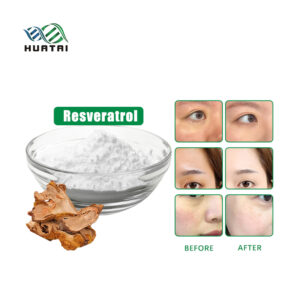
You formulate with trans-resveratrol. You know the headache. A beautiful clear serum turns brown in weeks. Why? Residual impurities. Low-purity extracts carry trace polyphenols. They oxidize fast. The result is structural degradation. Your formula is ruined.
Sourcing requires strict baseline metrics. Not marketing claims. Let’s look at the actual analytical benchmark for cosmetic-grade material.
Physicochemical Parameters & HPLC Specifications
You need absolute chemical stability. Below is the minimum standard.
| Parameter | Specification Limit | Test Method |
|---|---|---|
| INCI Name | Resveratrol | / |
| CAS Number | 501-36-0 | / |
| Appearance | White to off-white crystalline powder | Visual |
| Assay (Trans-Resveratrol) | >= 98.0% | HPLC |
| Melting Point | 253 C – 257 C | Capillary method |
| Heavy Metals (Pb, As, Cd, Hg) | <= 10 ppm total | ICP-MS |
Data Correction: The Tyrosinase Misconception
We need to fix a common industry data error. Many suppliers quote direct “mushroom tyrosinase inhibition” for resveratrol to prove brightening efficacy. This is not scientifically rigorous. Trans-resveratrol is highly unstable in standard tyrosinase assays. It actually acts as a suicide substrate.
The real physiological mechanism? It downregulates MITF transcription in melanocytes. It reduces cellular melanin synthesis by up to 34% at 50 uM in B16F10 cells, rather than directly inhibiting the tyrosinase enzyme itself. 数据来源于-[Journal of Biological Chemistry]
ROS Scavenging Capacity
Forget the ORAC marketing fluff. Look at the DPPH assay. Resveratrol exhibits an IC50 of 15.3 ug/mL. It neutralizes reactive oxygen species (ROS). It directly mitigates lipid peroxidation at the cellular membrane level under UVA irradiation. 数据来源于-[Journal of Agricultural and Food Chemistry]
MMP-1 Suppression
Collagen degrades under UV stress. Resveratrol suppresses the expression of MMP-1 (collagenase). Testing on human dermal fibroblasts shows a 55% reduction at a concentration of 10 uM. It halts matrix degradation. 数据来源于-[Journal of Dermatological Science]
Formulation Mechanics: Solvent Matrices
Recrystallization is your enemy. Precipitation is the primary failure point. Resveratrol is extremely hydrophobic. Water solubility is practically zero. Strict solvent pairing is mandatory.
| Solvent Matrix (INCI) | Maximum Solubility (approx.) | Formulation Phase |
|---|---|---|
| Water | < 0.03 mg/mL | Not recommended |
| Ethanol | 50 mg/mL | Pre-dissolution |
| Dimethyl Isosorbide | > 25 mg/mL | Active phase |
| PEG-400 | 40 mg/mL | Active phase |
| Propanediol | 15 mg/mL | Active phase |
pH Thresholds and Thermodynamics
Your final formulation must be buffered precisely. Keep it between pH 4.0 and 5.5. What happens if you go alkaline? A pH above 6.0 triggers rapid proton abstraction. The molecule undergoes epimerization. Your active trans-isomer flips into the biologically inactive cis-isomer.
Heat destroys this material. Introduce the dissolved active matrix exclusively during the cool-down phase. Keep it strictly below 40 C.
You must include chelating agents. Add 0.1% Disodium EDTA. The molecule is highly photosensitive. Use opaque, airless pump packaging. Direct UV exposure degrades the active linearly.
Synergistic INCI Combinations
Current R&D prioritizes synergistic pairing. Lower the individual concentration. Maximize transdermal delivery.
1. Resveratrol + Pterostilbene
Pterostilbene (INCI: Pterostilbene) is a dimethylated analog. It is extracted specifically from Pterocarpus bark (花榈木树皮). Its methylated structure offers superior lipophilicity. It penetrates cellular membranes far better than standard resveratrol. Combining these creates a prolonged, multi-pathway antioxidant network.
数据来源于-[Journal of Investigative Dermatology]
2. Resveratrol + Ferulic Acid + Tocopherol
Resveratrol isomerizes under UV light. Adding 0.5% Ferulic Acid (INCI) stabilizes the molecule. Accelerated stability testing (45 C for 3 months) shows this combination extends the shelf-life of clear serum formulations by up to 40%.
数据来源于-[Cosmetics & Toiletries]
Buyer FAQ: Sourcing & Procurement
Q1: How do you verify INCI Resveratrol purity to prevent cosmetic discoloration?
Every commercial batch undergoes HPLC analysis. We test against validated reference standards. A strict baseline of >= 98.0% purity is mandatory. We strictly limit the residual complex flavonoids. Those impurities cause the rapid oxidation and yellowing in finished liquid serums.
Q2: Is this powder suitable for transparent liquid formulations?
Yes. High-purity profiles ensure clear dissolution. Pre-mix with appropriate INCI co-solvents like Dimethyl Isosorbide or PEG-400. Cloudiness only occurs if the active is shocked by a high-water phase without proper solvent bridging.
Q3: What are the sample availability and minimum order quantities (MOQ)?
We provide complimentary sample kits for R&D formulation and stability challenge trials. Commercial MOQs are scalable. We support indie testing phases through large-scale OEM manufacturing.
Q4: How do you handle photosensitivity during transit?
The raw crystalline powder is vacuum-sealed. We use double-layered, light-proof aluminum foil bags. This completely blocks UV exposure. It prevents oxygen permeation. Isomer integrity remains intact during international transit.
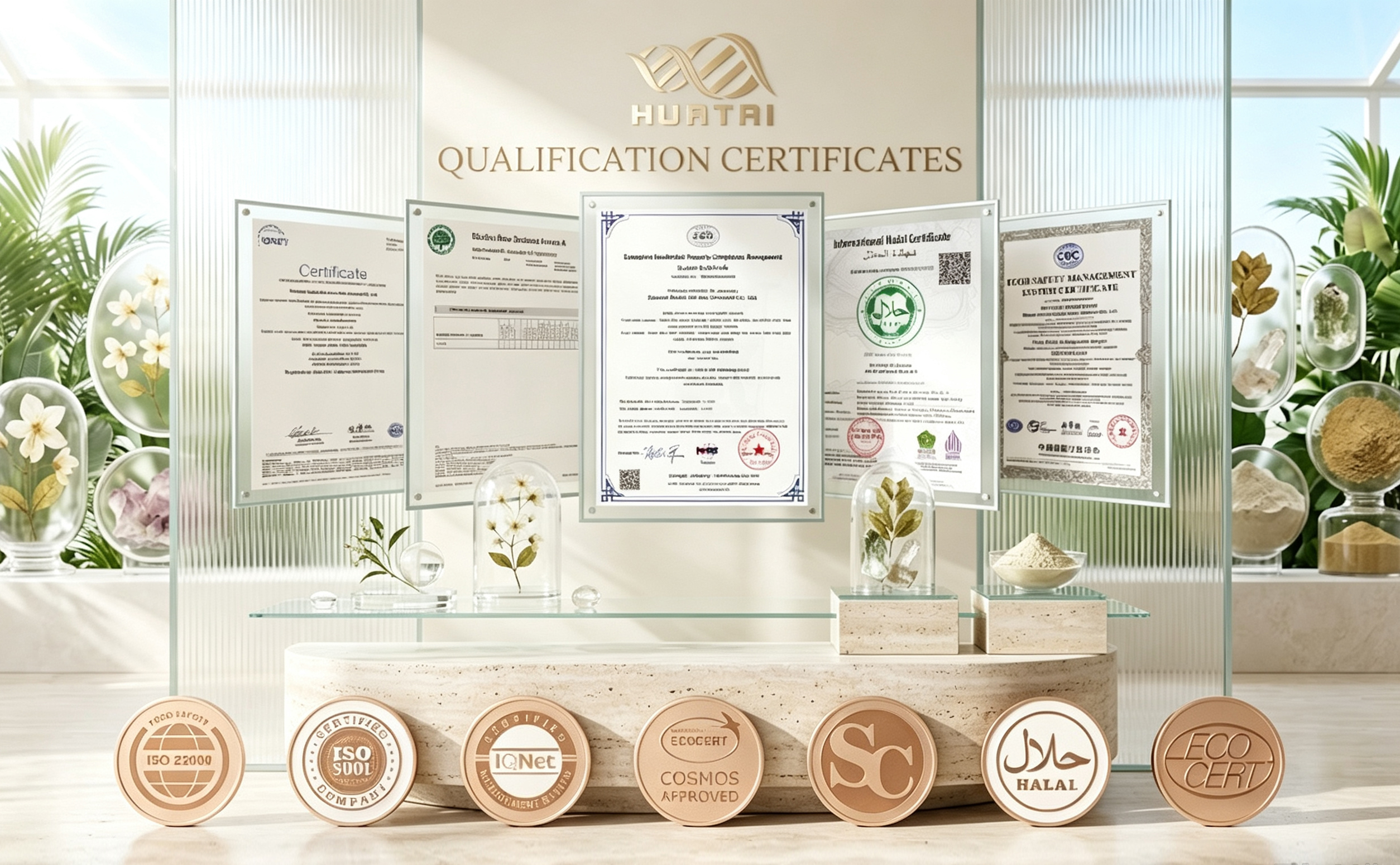
Q5: Do you supply regulatory documentation for compliance?
Every shipment includes a batch-specific COA, TDS, and MSDS. Full regulatory dossiers are available. This includes heavy metal testing reports and residual solvent data for your compliance submissions.
Q6: What is the optimal concentration range for topical applications?
Clinical efficacy is optimized between 0.2% and 1.0%. Exceeding 1.0% significantly increases formulation difficulty. Solubility drops. Thermodynamic stability fails. You get no proportional physiological gains.
Q7: What is the lead time for international bulk procurement?
Standard bulk batches dispatch within 3 business days. We partner with specialized chemical logistics providers. You get temperature-stable delivery direct to your formulation facility.
Q8: Does the raw material contain residual solvents?
Extraction protocols utilize exclusively cosmetic-grade and food-grade solvent systems. All residual solvents are vacuum-purged. We meet strict international pharmacopeia limits. Dermal compatibility is guaranteed.
 English
 Spanish
 German
 French
 Japanese
 Korean