
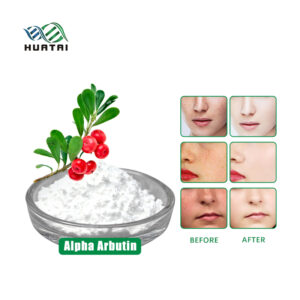
Let’s talk about a real formulation headache. Alpha-Arbutin and Retinol.
Combining these two is a massive engineering challenge. One loves water. The other loves oil. One is highly stable within a specific pH window. The other degrades if oxygen even touches it. Air, light, and minor thermal stress destroy pure retinol.
So why do formulators bother?
Because the clinical endpoint justifies the struggle. The biological synergy is undeniable. You get aggressive tyrosinase inhibition alongside accelerated cellular desquamation. It is a dual-pathway approach to melanogenesis. Let’s look at the rigorous data.
Physicochemical Blueprint and COA Baselines
Raw material selection dictates your final emulsion stability. Do not cut corners here. Alpha-Arbutin is a hydrophilic glycoside. Retinol is a lipophilic alcohol. You are managing two completely opposite thermodynamic profiles.
The data below reflects strict cosmetic grade rigor. Top-tier compliance now demands less than 1 ppm hydroquinone.
| Parameter | Alpha-Arbutin | Retinol |
|---|---|---|
| INCI Name | Alpha-Arbutin | Retinol |
| CAS Number | 84380-01-8 | 68-26-8 |
| Appearance | White crystalline powder | Yellow crystalline powder or viscous oil |
| Purity (HPLC) | Min 99.5 percent | Min 95.0 percent (Pure) / 10 to 50 percent (Encapsulated) |
| Solubility | Soluble in Water (approx 151 g/L at 20 C) | Soluble in Oils, Ethanol; Insoluble in Water |
| Optimal pH Range | 3.5 to 6.5 | 5.5 to 7.0 |
| Hydroquinone Limit | Max 1 ppm (HPLC) | Not Applicable |
| Thermal Stability | Stable below 40 C | Degrades rapidly above 40 C |
The Mechanism: A Dual-Pathway Attack
They do not compete biologically. They collaborate.
Alpha-Arbutin operates at the basal layer. It acts as a competitive inhibitor of tyrosinase. This physically blocks the oxidation of L-tyrosine to L-DOPA. Melanosome maturation slows down abruptly. Intracellular melanin synthesis drops. Clinical data proves that a 2 percent Alpha-Arbutin solution reduces melanin synthesis significantly over a standard 12-week trial. -Journal of Cosmetic Science
Then Retinol steps in. It drives keratinocyte proliferation. It forces the rapid shedding of existing pigmented corneocytes.
What does this mean for the physical formula? Retinol clears the existing surface pigment. Alpha-Arbutin stops the new pigment from forming. You shorten the visible efficacy timeline. You bypass the severe erythema risk usually associated with combining high-dose chemical exfoliants and Retinol. -Journal of Clinical and Aesthetic Dermatology
Formulation Architecture: The Engineering Challenge
This requires strict phase management. No exceptions.
1. Phase Segregation and Thermal Limits
Solubilize Alpha-Arbutin in the aqueous phase. Keep the processing temperature strictly below 40 C. You want to prevent any risk of glycosidic hydrolysis. Retinol goes into the lipid phase. Use an inert carrier like Squalane or Caprylic/Capric Triglyceride. Add it only during the final cooling phase. Wait until the batch hits 35 C. Use vacuum processing. Apply nitrogen blanketing immediately. Oxygen is the enemy.
2. Emulsifier Selection
Do not rely on traditional ethoxylated emulsifiers alone. The lipid droplets containing retinol will coalesce. Run a standard freeze-thaw test. Three cycles at minus 10 to 45 C. If the emulsion breaks, your system failed. Use a polymeric emulsifier. Acrylates/C10-30 Alkyl Acrylate Crosspolymer works exceptionally well. It stabilizes the oil droplets without requiring a high-shear environment.
3. pH Calibration Matrix
This is where many chemists fail. Alpha-Arbutin is stable between pH 3.5 and 6.5. Go below pH 3.5 and the molecular bond breaks. You risk releasing hydroquinone. Retinol requires a pH of 5.5 to 7.0. Target a final formula pH of 5.5 to 6.0. This narrow overlap is the undisputed stabilization sweet spot.
4. The Antioxidant Network
Retinol needs radical protection. Build a heavy antioxidant network in the oil phase. Add 0.1 to 0.5 percent Tocopherol. Add 0.05 percent BHT. Put a chelating agent like Disodium EDTA at 0.1 percent in the water phase. This specific matrix extends shelf life dramatically.
Industry Trends and Regulatory Compliance
Regulations are tightening globally. The European Commission SCCS sets strict boundaries.
Alpha-Arbutin is deemed safe up to a maximum of 2 percent in face creams. It is restricted to 0.5 percent in body lotions. Retinol faces similar scrutiny. The SCCS mandates a maximum of 0.3 percent in leave-on facial products. Body lotions get a strict 0.05 percent limit. -SCCS Regulatory Mandate
How are advanced manufacturing labs adapting? Encapsulation technology.
The current market trend pairs free-form Alpha-Arbutin with liposome-encapsulated Retinol. This solves the phase conflict entirely. It isolates the highly reactive retinoid from the water phase. Bioavailability goes up. Shelf-life stability skyrockets.
Top 8 Formulator FAQs for B2B Procurement

 English
 Spanish
 German
 French
 Japanese
 Korean