
A comparison with Ceramide NP can make a Mannosylerythritol Lipid (MEL) ingredient look highly attractive. One published study found that certain MELs gave better results than C18-Ceramide NP in a damaged skin cell model. While this is a useful finding for developers considering ceramide alternatives, the difficulty begins when a supplier uses the study to support a commercial MEL grade without explaining how closely its composition matches the experimental material.
Ingredient Comparison Overview
| Feature | Ceramide NP | MELs (Mannosylerythritol Lipids) |
|---|---|---|
| Primary Role | Barrier-focused lipid system constituent | Surface-active ingredient; forms liquid-crystalline phases |
| Source/Composition | Part of the natural ceramide family in the stratum corneum | Fermentation-derived; contains various MEL derivatives based on production |
| Key Research Insight | Used as a reference benchmark for barrier recovery | Certain pure structures showed greater cell-viability recovery than C18-Ceramide NP |
The MEL in the Paper May Not Be the MEL in the Sample
The 2022 study examined chemically synthesized MELs. Researchers could control their molecular structures and compare the effects of different fatty-acid chain lengths. Some structures produced greater recovery of cell viability after SDS-induced damage than C18-Ceramide NP, while others behaved differently.
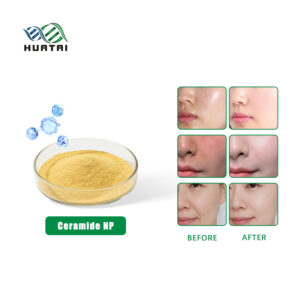
Crucial Distinction: For a raw material buyer, the distinction between those pure compounds and commercial grades is critical. A fermentation-derived ingredient may contain several MEL derivatives. A brochure that identifies the material only as “MEL glycolipids” leaves a substantial gap between the published experiment and the product being offered.
The earlier moisturizing research needs similar care. In 2012, most tested MEL derivatives achieved cell-viability recovery rates above 80%. A preliminary human study used a 5% MEL-B solution to increase hydration. However, this does not tell us how a mixed MEL ingredient will perform at a different concentration in a finished cream.
Two Ingredients, Different Formulation Roles
- Ceramide NP: Belongs to the ceramide family found in the stratum corneum. It is typically selected for a barrier-focused formulation alongside cholesterol and free fatty acids.
- MELs: Have a different chemical structure and act as surface-active ingredients. While they can form liquid-crystalline phases, this does not guarantee a finished cream will reproduce the skin’s lipid arrangement.
An MEL grade could alter an emulsion originally developed for Ceramide NP, especially if it contains multiple glycolipids or a carrier. For a moisturizer, the question is whether the revised product maintains hydration, stability, and acceptable skin tolerance. If barrier recovery is the goal, suitable barrier measurements like TEWL are essential.
What Would Make the Supplier’s Proposal Convincing?
To truly evaluate a supplier’s claims, developers should look for the following:
- Derivative Identification: Total MEL assay confirms the amount of glycolipid but cannot identify individual derivatives. Exact structural data is needed to match research samples.
- Contextual Moisturizing Data: A mixed MEL grade used at a different concentration in a cream has not inherently undergone the same rigorous testing as a pure 5% MEL-B solution.
- Processing Requirements: Pure Ceramide NP powders and prepared MEL dispersions have different active contents and processing needs, affecting formulation costs and replacement levels.
There is no established universal conversion ratio between commercial MEL glycolipids and Ceramide NP.
Frequently Asked Questions (FAQ)
Q: Can a supplier use the 2022 MEL study to claim superiority over Ceramide NP?
A: The study found higher cell-viability recovery for certain synthesized MEL structures than for C18-Ceramide NP under its specific test conditions. It does not establish superiority for every commercial mixed MEL ingredient.
Q: Does similar moisturizing performance mean the ingredients are interchangeable?
A: Comparable finished-product hydration may support substitution in a moisturizer. However, it would not, by itself, establish equivalent barrier-lipid function.
References
- Yamamoto S, et al. (2012). The moisturizing effects of glycolipid biosurfactants, mannosylerythritol lipids, on human skin. Journal of Oleo Science, 61(7), 407-412. DOI: 10.5650/jos.61.407
- Kondo T, et al. (2022). Self-Assembling Properties and Recovery Effects on Damaged Skin Cells of Chemically Synthesized Mannosylerythritol Lipids. ChemBioChem, 23(2), e202100631. DOI: 10.1002/cbic.202100631

 English
 Spanish
 German
 French
 Japanese
 Korean