Table of Contents
- 1. Physicochemical Profiling and Molecular Blueprint
- 2. Melanogenesis Modulation: In Vitro Test Benchmarks
- 3. Formulation Thermodynamics and Phase Integration
- 4. Synergistic Active Matrices
- 5. Manufacturing Quality Benchmarks and COA Parameters
- 6. Global Compliance and Regulatory Trajectory
- 7. Sourcing from Glabridin Powder Manufacturers: Top 8 FAQs
- 8. Open-Source Literature References
Physicochemical Profiling and Molecular Blueprint
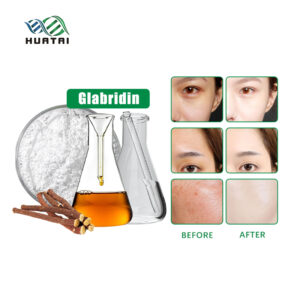
Glabridin (Chemical formula: C20H20O4, CAS No. 59870-68-7) is a lipophilic isoflavan extracted from the root of Glycyrrhiza glabra. With a molecular weight of 324.37 g/mol, the molecule features two hydroxyl groups responsible for its biological activity.
Unlike hydrophilic brightening agents, Glabridin’s lipophilic nature allows for a high affinity with the stratum corneum’s lipid bilayer. However, this same property requires precise solvent engineering to prevent crystallization within aqueous formulations. Industrial purification processes yield various grades, directly correlating with color indices and formulation suitability.
| Parameter | Technical Data |
|---|---|
| IUPAC Name | 4-[(3R)-8,8-Dimethyl-3,4-dihydro-2H-pyrano[6,5-f]chromen-3-yl]benzene-1,3-diol |
| Molecular Weight | 324.37 g/mol |
| LogP (Octanol/Water Partition) | ~ 3.8 (Highly Lipophilic) |
| Melting Point | 156°C to 158°C |
| Optimal pH Stability Range | 4.5 to 7.5 |
Melanogenesis Modulation: In Vitro Test Benchmarks
Evaluating tyrosinase inhibitors requires distinguishing between cell-free enzyme assays and cellular assays. Glabridin operates through multiple pathways: direct competitive inhibition of tyrosinase, and the downregulation of tyrosinase-related proteins (TRP-1 and TRP-2).
- Mushroom Tyrosinase Assay (Cell-Free): Literature indicates Glabridin exhibits an IC50 ranging from 0.1 to 1.0 μg/mL depending on the substrate concentration (L-DOPA or Tyrosine).
- B16F10 Melanoma Cell Assay: In cellular models, Glabridin demonstrates significant melanin reduction at concentrations of 0.5 to 1.0 μg/mL.
- Cytotoxicity Verification: Cell viability assays (MTT) confirm that at the effective melanogenesis-inhibiting concentrations, Glabridin maintains over 95% cell viability, indicating that its brightening effect is independent of cellular toxicity.
Scientific Context on Active Comparisons: Formulators often compare Glabridin with Kojic Acid and Alpha Arbutin. Such comparisons must remain context-dependent. Kojic Acid and Alpha Arbutin are highly water-soluble, making them ideal for aqueous serums. Glabridin is lipophilic, making it highly effective in emulsions or lipid-based delivery systems. Both pathways are valid, and the choice depends on the target formulation matrix rather than a binary “superiority” metric.
Formulation Thermodynamics and Phase Integration
Integrating high-purity Glabridin powder demands strict adherence to thermodynamic principles to ensure bioavailability and prevent phase separation.
Dissolution Protocol: Direct addition of Glabridin powder to an aqueous phase causes instant precipitation, rendering the active biologically unavailable.
- The powder must be completely pre-dissolved in a suitable organic solvent. Cosmetic-grade glycols (1,3-Butylene Glycol, Propylene Glycol, or Pentylene Glycol) are standard.
- The dissolution phase should be gently heated to 40°C – 50°C.
- Once a clear, homogeneous solution is achieved, it should be integrated into the oil phase of an emulsion before homogenization, or added during the cool-down phase (below 45°C) for cold-process formulations.
Synergistic Active Matrices
Clinical formulations rarely rely on a single active. Layering mechanisms of action prevents pathway bottlenecking.
| Active Matrix Pair | Mechanism of Action / Rationale | Formulation Considerations |
|---|---|---|
| Glabridin (0.05%) + Niacinamide (2.0-5.0%) |
Glabridin inhibits initial melanin synthesis; Niacinamide inhibits melanosome transfer to keratinocytes. | Niacinamide is hydrophilic; Glabridin is lipophilic. Requires a stable O/W emulsion. |
| Glabridin (0.1%) + Ascorbyl Glucoside (2.0%) |
Glabridin targets tyrosinase; Ascorbyl Glucoside provides radical scavenging and fading of oxidized melanin. | Ascorbyl Glucoside requires a buffer system (pH 6.5) which perfectly aligns with Glabridin’s optimal pH stability. |
| Glabridin (0.05%) + Ceramide NP (0.5%) |
Pairs pigment suppression with barrier repair, mitigating inflammation-induced hyperpigmentation. | Both actives require precise lipid-phase dissolution and elevated processing temperatures. |
Manufacturing Quality Benchmarks and COA Parameters
Sourcing from verified manufacturers requires auditing strict Certificate of Analysis (COA) parameters. Specifications vary based on the extraction concentration.
| Parameter | 40% Glabridin Standard | 90% – 99% Glabridin High-Purity |
|---|---|---|
| Physical Appearance | Yellowish-brown to brown fine powder | White to off-white crystalline powder |
| Optimal Application | Body lotions, opaque creams, soap bases | Transparent serums, clinical emulsions |
| Active Content (HPLC) | ≥ 40.0% | ≥ 90.0% / ≥ 99.0% |
| Loss on Drying | ≤ 5.0% | ≤ 1.0% |
| Heavy Metals (Pb, As, Cd, Hg) | < 10 ppm total | < 10 ppm total |
| Microbial Limit | < 1000 cfu/g | < 100 cfu/g |
* Detection Methodology: HPLC is the mandatory quantitative method for active assay. UV spectrophotometry is inadequate due to overlapping absorption bands with other licorice flavonoids.
Global Compliance and Regulatory Trajectory
- European Union (EC No 1223/2009): Fully compliant. No annex restrictions regarding usage limits, though formulators typically cap usage at 0.5% for 99% purity due to cost-efficacy plateaus.
- United States (MoCRA): Recognized as safe for cosmetic application.
- China (CSAR): Listed in the IECIC (Inventory of Existing Cosmetic Ingredients in China).
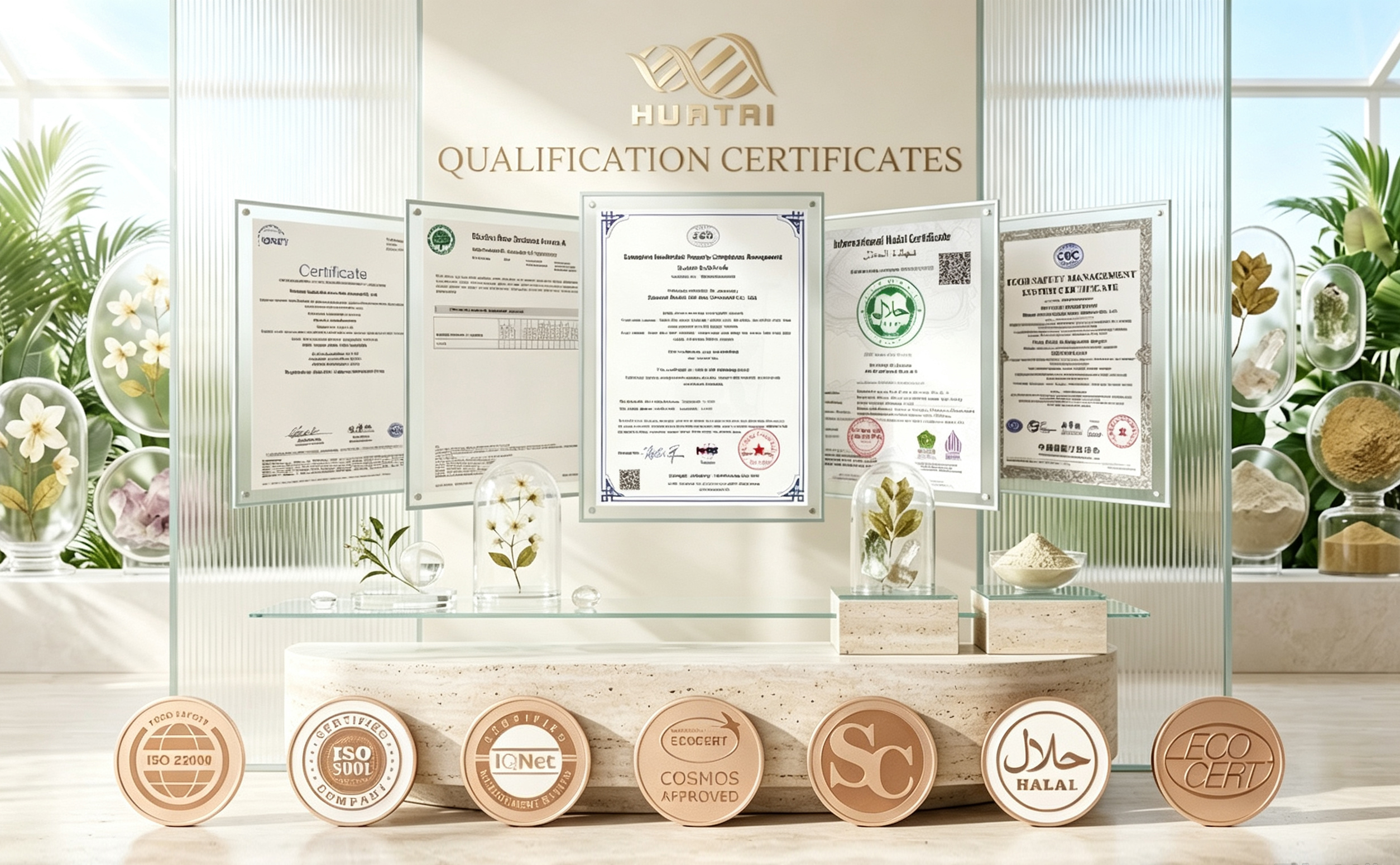
- Sustainability: Leading manufacturers utilize zero-residue extraction techniques, enabling COSMOS and ECOCERT approvals for specific grades, aligning with eco-toxicological safety profiles.
Sourcing from Glabridin Powder Manufacturers: Top 8 FAQs
1. What dictates the choice between 40% and 99% Glabridin powder?
The choice is determined by the final product’s physical appearance and cost matrix. 40% powder carries residual botanical flavonoids that impart a yellowish-brown tint, suitable for opaque creams. 99% purity is stripped of colorants, engineered for high-end, color-sensitive transparent serums.
2. How do formulators overcome Glabridin’s bioavailability barrier in human skin?
Because the stratum corneum is a highly effective barrier, topical application of raw powder in a basic cream yields low penetration. Advanced formulators utilize liposomal encapsulation or carefully balanced glycol-lipid delivery vehicles to ensure the molecule reaches the basal layer where melanocytes reside.
3. Does Glabridin cause photosensitivity?
No. Unlike alpha hydroxy acids (AHAs) or retinoids, Glabridin does not thin the stratum corneum or induce photosensitization. It acts as an antioxidant against UVB-induced ROS, making it safe for daytime application when formulated with broad-spectrum SPF.
4. What is the standard Minimum Order Quantity (MOQ) for lab scale vs. commercial scale?
Manufacturers structured for B2B supply chains typically offer MOQ flexibility starting at 1kg for pilot runs, scaling up to multi-ton capacities for global FMCG distribution. Test samples are standard protocol before commercial agreements.
5. How is batch-to-batch consistency maintained in botanical extracts?
Premium manufacturers resolve biological variability through stringent biomass selection, standardized solvent extraction, and final HPLC equalization to guarantee the exact active percentage (e.g., exactly 40.0% or 99.0%) regardless of the harvest season.
6. Can Glabridin be formulated in low-pH chemical peel solutions?
It is not recommended. Glabridin degrades structurally in environments below pH 4.0. If combined with chemical exfoliants like Salicylic Acid or Glycolic Acid, the final formula pH must be buffered to at least 4.5 to maintain the isoflavan’s integrity.
7. Are residual solvents a concern with Glabridin extracts?
Low-tier extraction may leave traces of harsh organic solvents. Reputable manufacturers comply with ICH Q3C guidelines, ensuring residual solvents (like ethanol or ethyl acetate) are stripped to negligible parts-per-million (ppm), verified via gas chromatography (GC) on the COA.
8. Is Glabridin considered a “clean beauty” ingredient?
Yes. When sourced from manufacturers operating with ISO 14001 environmental standards and utilizing green chemistry extraction methods, Glabridin aligns perfectly with clean beauty standards, offering a plant-derived alternative to controversial synthetic lightening agents.
Open-Source Literature References
- Yokota, T., et al. (1998). “The inhibitory effect of glabridin from licorice extracts on melanogenesis and inflammation.” Pigment Cell Research, 11(6), 355-361.
- Simmler, C., et al. (2013). “Licorice roots: A review of species, chemical profiles, and applications.” Fitoterapia, 90, 160-184.
- D’Mello, S. A., et al. (2016). “Signaling Pathways in Melanogenesis.” International Journal of Molecular Sciences, 17(7), 1144.
- Zhu, W., & Gao, J. (2008). “The use of botanical extracts as topical skin-lightening agents for the improvement of skin pigmentation disorders.” Journal of Investigative Dermatology Symposium Proceedings, 13(1), 20-24.
 English
  Spanish
  German
  French
  Japanese
  Korean