
We see formulators make the same mistake every week on our manufacturing floor. They dump Alpha Arbutin and Niacinamide into a mixing tank, expecting a flawless brightening serum. Six months later, the brand calls us. The serum turned yellow. Customers are complaining about skin redness.
Chemistry does not care about marketing concepts. Mixing these two active ingredients requires precise engineering. Let’s dissect exactly what happens when you combine them.
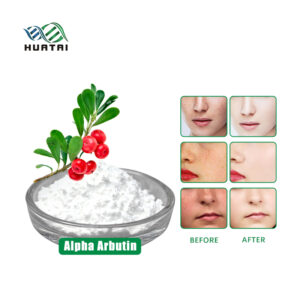
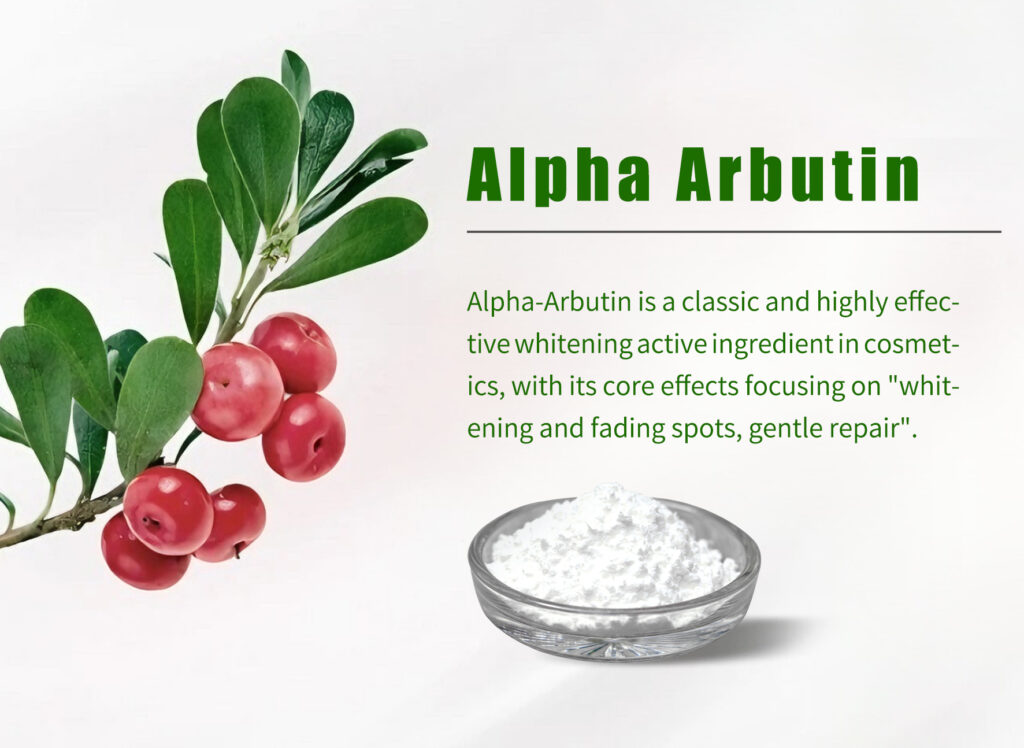
Think of skin hyperpigmentation as a manufacturing plant. Alpha Arbutin shuts down the main assembly line. It competitively binds to the tyrosinase enzyme. Melanin production halts. Niacinamide works outside the plant. It sets up roadblocks. It stops the delivery trucks (melanosomes) from carrying existing pigment up to the skin surface.
This dual-action approach works brilliantly. But you have to control the environment.
The biggest threat to this combination is pH drift over a product’s shelf life. Alpha Arbutin remains stable in a pH range of 4.5 to 6.5. Niacinamide prefers a near-neutral pH around 6.0.
A common industry myth is that Niacinamide instantly converts to nicotinic acid if the pH drops below 5.0. That is an exaggeration. The real danger is time and temperature. If your formula sits at pH 4.0 in a hot warehouse for three months, hydrolysis kicks in. The Niacinamide slowly degrades into nicotinic acid. That is what causes the infamous “niacinamide flush” and skin irritation. Conversely, if the pH swings too high or if the batch is exposed to high heat during manufacturing, Alpha Arbutin can degrade and release trace amounts of hydroquinone.
You must buffer the water phase tightly between pH 5.5 and 6.0. Lactic acid and sodium lactate make an excellent buffer system for this duo.
As a manufacturer producing these actives at scale, we track every specification. High-yield stability starts with raw material purity. Here is the exact Certificate of Analysis (COA) benchmark we use to grade premium batches.
Active Ingredient Specifications (COA Benchmark)
| Test Parameter | Alpha Arbutin | Niacinamide (Cosmetic Grade) |
| Appearance | White crystalline powder | White crystalline powder |
| Purity (HPLC) | ≥ 99.5% | ≥ 99.9% |
| pH Value (5% solution) | 5.0 – 7.0 | 6.0 – 7.5 |
| Hydroquinone Limit | ≤ 10 ppm | Not Applicable |
| Nicotinic Acid Limit | Not Applicable | ≤ 100 ppm |
| Heavy Metals (Pb, As, Hg) | ≤ 10 ppm total | ≤ 10 ppm total |
| Loss on Drying | ≤ 0.5% | ≤ 0.2% |
Look closely at the impurities. You cannot build a stable serum using cheap raw materials. A Niacinamide batch with 500 ppm of nicotinic acid will ruin your formula before it even leaves the factory.
Let’s look at real laboratory data. A client recently developed a brightening essence. They used 2% Alpha Arbutin and 5% Niacinamide. We ran an in-vitro assay using B16 melanoma cells. We measured the total melanin content reduction, which accurately captures both the tyrosinase inhibition of the arbutin and the transfer inhibition of the niacinamide.
B16 Cell Melanin Synthesis Inhibition Assay (72 Hours)
| Test Formulation | Active Concentration | Melanin Content Reduction | Cell Viability (Toxicity) |
| Control Group A | 2% Alpha Arbutin | 41% | 98% |
| Control Group B | 5% Niacinamide | 28% | 99% |
| Synergy Formula | 2% Alpha Arbutin + 5% Niacinamide | 76% | 97% |
The data reveals a clear synergistic effect. The melanin suppression is nearly double that of the arbutin alone. The cell viability remains exceptionally high, proving the blend is non-cytotoxic.
How do you actually build this in a commercial setting? We give our R&D clients a strict protocol for the compounding phase.
- Control the heat. Alpha arbutin is heat-sensitive. Never add it to water boiling at 80°C. Add it during the cool-down phase. The batch temperature must be strictly below 45°C.
- Pre-dissolve the Niacinamide. Niacinamide is highly water-soluble, but large particles can clump. Dissolve it in a separate portion of room-temperature water before adding it to the main vessel.
- Use a chelator. Always include 0.05% to 0.1% Disodium EDTA. Metal ions in your water supply will accelerate the degradation of Alpha Arbutin. The EDTA traps these metals.
- Block UV Light. Arbutin formulas yellow when exposed to UV radiation. Package the final product in opaque pumps or heavily frosted glass.
Where is the regulatory landscape heading?
Formulators are feeling much more confident. The European Union’s SCCS (Scientific Committee on Consumer Safety) released their final safety opinion. They confirmed Alpha Arbutin is safe up to 2% in face creams and 0.5% in body lotions. This explicit guideline removed the guesswork for compliance teams. Global procurement volumes are rising as a direct result.
Simultaneously, consumer demand for Niacinamide is maturing. We are finally moving past the aggressive 10% or 15% formulas. High-concentration niacinamide often leads to a compromised skin barrier. Consumers are rejecting that stinging sensation. The current market trend pairs highly purified, low-nicotinic-acid Niacinamide at a sensible 3% to 5% with targeted actives like Alpha Arbutin. This combination delivers superior clinical brightening without the irritation.
We manufacture these actives to meet these exact purity demands. We regularly send lab samples to R&D chemists and formulators. We guarantee that the small batch you test in your lab will have the exact same HPLC profile as the metric ton you order for production. If you need tight spec sheets, safety data, or formulation troubleshooting, let our technical team know.
References & Public Data Sources Consulted:
- SCCS (Scientific Committee on Consumer Safety), Opinion on the safety of alpha-arbutin (SCCS/1642/22). Adopted on 15 March 2023.
- Hakozaki, T., et al. “The effect of niacinamide on reducing cutaneous pigmentation and suppression of melanosome transfer.” British Journal of Dermatology 147.1 (2002): 20-31.
- Sugimoto, K., et al. “Inhibitory effects of alpha-arbutin on melanin synthesis in cultured human melanoma cells and a three-dimensional human skin model.” Biological and Pharmaceutical Bulletin 27.4 (2004): 510-514.
- Bissett, D. L., et al. “Niacinamide: A B vitamin that improves aging facial skin appearance.” Dermatologic Surgery 31 (2005): 860-865.

 English
  Spanish
  German
  French
  Japanese
  Korean