Let us drop the marketing fluff. You know Glabridin. The industry calls it “whitening gold.” If you formulate skincare, you also know its dark side. It stubbornly resists dissolving. It degrades if you look at it wrong. The price tag is brutal.
Why do we still formulate with it? Because the tyrosinase inhibition data does not lie. We extract and manufacture this active ingredient daily at Shaanxi Huatai Bio-Fine Chemicals Co. We see the raw data before the powder hits your mixing tanks. Let us look at what actually happens when you push Glabridin into a commercial skincare chassis.
The Reality of Tyrosinase Inhibition
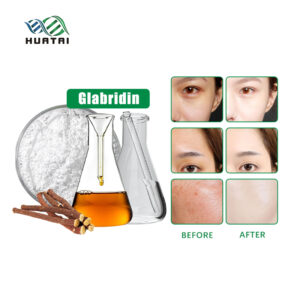
Everyone claims their active ingredient brightens skin. We prefer hard numbers. Glabridin targets the tyrosinase enzyme directly. It blocks the conversion of dopa to melanin. How effective is it really? Look at the baseline benchmark data compared to standard market alternatives.
| Active Ingredient | IC50 for Tyrosinase Inhibition (μM) | Relative Efficacy vs Ascorbic Acid |
| Glabridin (40%) | 0.45 | approx. 232x stronger |
| Kojic Acid | 9.80 | approx. 10x stronger |
| Alpha-Arbutin | 50.00 | approx. 2x stronger |
| Ascorbic Acid | 105.00 | Baseline (1x) |
Data reflects isolated in-vitro tests on murine B16 melanoma cells.
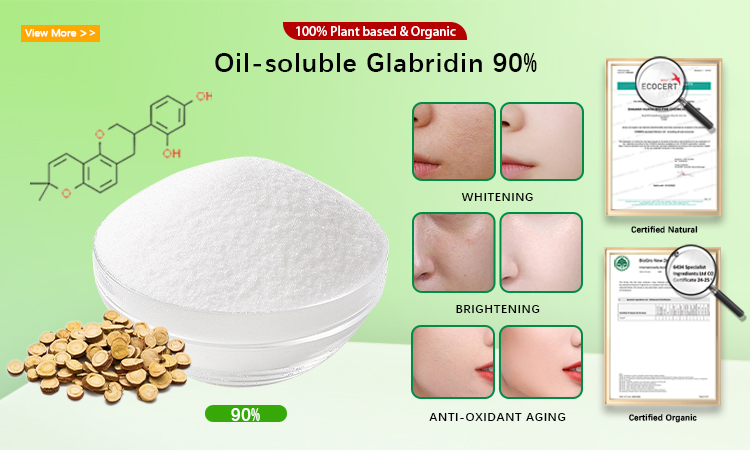
Those numbers explain the hype. You need dramatically less active load to achieve the same inhibition pathway. But having a potent powder means absolutely nothing if it crashes out of your emulsion.
Tackling the Formulation Nightmare
Here is a scenario we see every month. A brand wants a premium spot-fading serum. They demand a 0.1% active load. The R&D chemist adds the powder directly to the water phase. It floats. They crank up the heat. The batch turns muddy.
Glabridin is highly lipophilic. You cannot just dump it into a beaker of water. We constantly tell our clients to respect the solvent system. You need a targeted carrier.
Our Bench Chemistry Cheat Sheet:
- Primary Solvents: 1,3-Butanediol (BG) or Propylene Glycol (PG) are your best friends here. PEG-400 also works well.
- Temperature Control: Dissolve it at 60 to 80 degrees Celsius. Do not hold it at high heat for extended periods. Oxidative degradation will ruin the batch and turn it brown.
- Cool Down Phase: Add your dissolved active mixture during the cool-down phase of your emulsion. Keep it below 40 degrees Celsius.
- pH Stability: Keep your final formulation pH between 5.5 and 7.0. Acidic environments below pH 4.0 will severely compromise long-term stability.
Navigating Specifications: 40% vs 90%
Procurement managers often ask us which purity to buy. Higher is not always better for your specific application. Here is how we break down our product lines at huataibio.com.
| Specification | Appearance | Primary Application | Formulation Pros | Formulation Cons |
| Glabridin 40% | Brownish-yellow powder | Creams, Lotions | Easier to handle, highly cost-effective | Color tint limits use in clear serums |
| Glabridin 90% | White to off-white powder | High-end clear serums | Zero color interference | Premium cost, requires precise dissolving |
If you are mixing a thick white emulsion, save your budget. Buy the 40% grade. The slight brownish tint easily hides in an opaque cream base. Are you developing a transparent essence? You must step up to the 90% grade. Otherwise, your premium serum will look like weak tea.
Transparency in Testing (COA Snapshot)
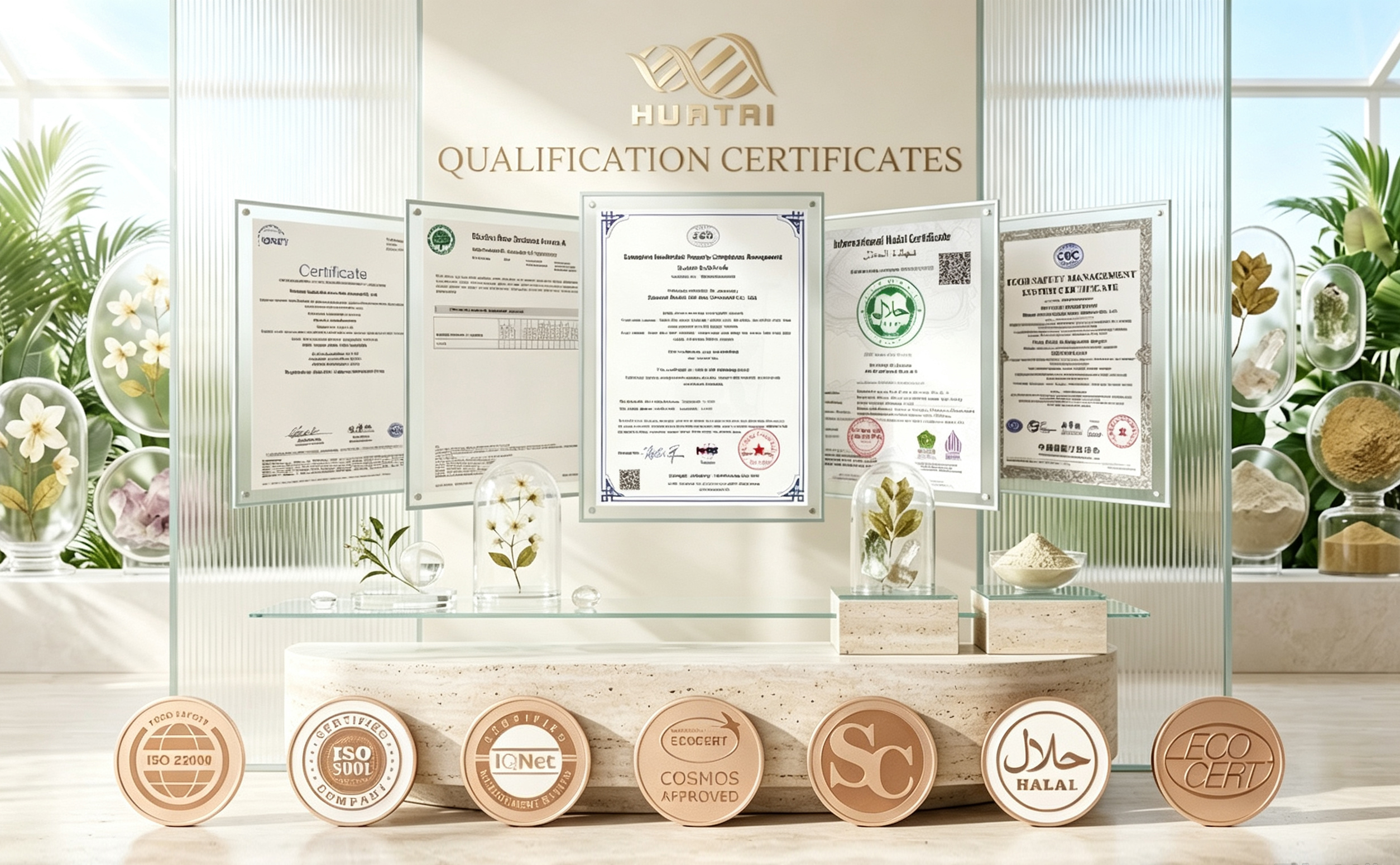
Quality control matters. A reliable supplier never hides their testing methodology. Below is a snapshot of our standard release criteria for the 40% grade.
| Test Item | Specification Limit | Test Method |
| Assay (Glabridin) | >= 40.0% | HPLC |
| Loss on Drying | <= 5.0% | 105C, 2 hours |
| Heavy Metals (Pb) | <= 2.0 ppm | AAS |
| Total Plate Count | <= 1000 cfu/g | GB 4789.2 |
| Solubility Check | Clear in 1,3-BG | Visual Bench Test |
Pay attention to that last row. We verify that every batch dissolves clearly in Butylene Glycol before it leaves our facility. This completely prevents unpleasant surprises in your lab.
Industry Trends and the Compliance Push
The regulatory landscape is tightening rapidly. Have you tracked the recent EU BPA ban discussions? Regulators are heavily scrutinizing synthetic lighteners. The market is desperately pivoting. Brands need proven, plant-derived alternatives that actually pass strict toxicology screens.
Licorice root extract fits perfectly into this “clean beauty” narrative. It does this without sacrificing clinical efficacy. Smart formulators currently blend it with Niacinamide or Bakuchiol. This creates synergistic brightening complexes. You reduce reliance on controversial synthetics while maintaining your aggressive performance claims.
Real Application Case: The Stubborn Serum
Last quarter, a mid-sized European skincare brand contacted us. They faced a massive headache. Their 90% Glabridin clear serum was crystallizing. This happened right at the three-month shelf-life mark. The problem? They used an insufficient ratio of propanediol. They also completely skipped encapsulating agents.
We reviewed their INCI list. We suggested a mandatory pre-dissolving step. They needed a 1:8 ratio of Glabridin to a Butylene Glycol and PEG-40 Hydrogenated Castor Oil blend. We also advised them to check www.natural-huatai.com for our updated solvent compatibility charts.
The result? The new pilot batch passed the 6-month accelerated stability test at 45 degrees Celsius. Zero crystal formation. Zero efficacy drop.
Procurement Advice
Do not buy this ingredient blind. Always request the HPLC chromatogram. Ask your rep about the extraction solvent residue. Need a sample to test stability in your specific chassis? Hit us up. We will ship one to your lab. Let the raw chemistry speak for itself.
Reference Literature:
- Yokota, T., et al. (1998). “The inhibitory effect of glabridin from licorice extracts on melanogenesis and inflammation.” Pigment Cell Research, 11(6), 355-361.
- Simmler, C., et al. (2013). “Licorice root: A botanical dietary supplement and unique source of flavonoids.” Journal of Natural Products, 76(6), 1113-1120.
- EU CosIng Annexes (Updated 2023 public guidelines on cosmetic plant extracts and toxicological thresholds).
- Draelos, Z. D. (2007). “Skin lightening preparations and the hydroquinone controversy.” Dermatologic Therapy, 20(5), 308-313.
 English
  Spanish
  German
  French
  Japanese
  Korean